Home / Manual Handling Training, PPE Guide & Contractor Safety Management.
In the bustling construction sites of Riyadh’s new developments, the busy warehouses of Jeddah’s port area, and the complex industrial facilities of Jubail and Yanbu, workplace safety isn’t just about following rules—it’s about protecting people, productivity, and progress. As Saudi Arabia advances toward its Vision 2030 goals with unprecedented development projects, three fundamental safety components stand out as universal requirements across all industries: proper techniques for physical work, correct use of protective equipment, and effective management of contracted personnel.
At Global Arab, we’ve partnered with organizations across the Kingdom to implement safety systems that actually work in Saudi workplaces. What we’ve discovered through training thousands of workers is that safety excellence rests on three interconnected pillars: comprehensive Manual Handling Training Courses, a practical understanding captured in a thorough personal protective equipment (PPE) guide, and systematic contractor safety management Training. This guide explores why each element is critical, how they work together, and how implementing them can transform your organization’s safety culture while ensuring compliance with Saudi regulations.
Employers are investing heavily in HSE training courses in Saudi Arabia to meet international and local saudi standards, reduce accidents, and improve employee well-being. Whether you’re an employer, safety professional, or an individual seeking career growth, choosing the right course can significantly enhance your skills and employability.
Saudi Arabia’s rapid industrial and construction growth presents unique safety challenges:
Diverse Workforce: With workers from multiple nationalities and language backgrounds, standardized training and clear guidance are essential
Accelerated Project Timelines: Fast-paced Vision 2030 projects require efficient safety systems that don’t slow progress
Climate Considerations: Extreme heat affects both manual work capacity and PPE effectiveness
Regulatory Evolution: Saudi regulations are becoming increasingly aligned with international standards
Contractor-Reliant Operations: Most major projects involve multiple contractors working simultaneously, requiring coordinated safety management
Global Arab addresses these realities through training programs specifically designed for Saudi work environments. Our approach combines international best practices with local implementation knowledge, ensuring that safety training isn’t just theoretical but practically applicable in workplaces from Dammam to Jeddah, Riyadh to Jubail.
Let’s start with a startling statistic: across industries worldwide, musculoskeletal disorders (MSDs)—primarily back injuries—account for approximately 30% of all workplace injuries. In Saudi Arabia, where construction, logistics, and industrial activities are booming, improper manual handling represents one of the most common and costly safety issues. Yet most of these injuries are preventable through proper training.
Manual Handling Training Courses at Global Arab go far beyond “lift with your legs, not your back.” We teach a systematic approach to moving, handling, and lifting objects that protects workers from both immediate injuries and long-term musculoskeletal damage.
1. Understanding the Human Body and Injury Mechanisms
Spine Mechanics: How the spine works and why certain lifting positions cause damage
Muscle Function: Which muscle groups should bear the load during different movements
Cumulative Trauma: How small, repeated strains lead to major injuries over time
Individual Factors: Recognizing that workers of different ages, sizes, and fitness levels have different capabilities
2. The TILE Assessment Framework
We teach workers to assess every manual handling task using the TILE framework:
Task: What does the activity involve? (Lifting, lowering, pushing, pulling, carrying)
Individual: Who is doing the activity? (Considering their capability, training, experience)
Load: What is being moved? (Weight, size, stability, grip points)
Environment: Where is the activity taking place? (Space constraints, floor surfaces, temperature, lighting)
3. Practical Lifting and Moving Techniques
The 8-Step Safe Lifting Method: A systematic approach for different load types
Team Lifting Protocols: How to coordinate when multiple people handle one load
Pushing vs. Pulling: Which is safer and why
Awkward Load Handling: Techniques for long, bulky, or unbalanced items
Using Mechanical Aids: When and how to use trolleys, hoists, and other equipment
4. Workplace-Specific Applications
Construction Sites: Handling building materials in challenging environments
Warehouses and Logistics: Repetitive loading/unloading in Saudi’s growing logistics sector
Healthcare Facilities: Safe patient handling techniques
Industrial Settings: Moving equipment and materials in manufacturing plants
“Before Global Arab’s Manual Handling Training Courses, back pain was just accepted as part of the job in our warehouse,” says Omar Al-Rashid, operations manager for a Jeddah logistics company. “We had three back injury claims in six months. After implementing their training program, we’ve gone eighteen months without a single manual handling injury. The training didn’t just teach techniques—it changed how our team thinks about every lift, every push, every movement. The productivity improvement was an unexpected bonus.”
Investing in Manual Handling Training Courses delivers measurable returns:
Reduced Injury Rates: Fewer workers’ compensation claims and lost-time incidents
Lower Absenteeism: Healthy workers with fewer musculoskeletal issues
Increased Productivity: Efficient movement techniques save time and energy
Better Morale: Workers feel cared for when employers invest in their wellbeing
Regulatory Compliance: Meeting Saudi Occupational Safety and Health requirements
At Global Arab, our Manual Handling Training Courses include practical sessions where participants practice techniques with actual loads in simulated work environments. We believe competency comes from doing, not just listening.

If manual handling is about preventing injuries through proper technique, PPE is about creating a physical barrier between workers and hazards that cannot be eliminated through other means. A comprehensive personal protective equipment (PPE) guide isn’t just a list of equipment—it’s a systematic approach to selecting, using, maintaining, and replacing protective gear appropriate for specific workplace hazards.
At Global Arab, we teach that effective PPE management involves five critical components:
1. Hazard Assessment and PPE Selection
Identifying Real Hazards: What protection is actually needed versus what’s convenient
Hierarchy of Controls: Understanding that PPE is the last line of defense after elimination, substitution, and engineering controls
Saudi-Specific Considerations: How heat, dust, and other environmental factors affect PPE selection
Compatibility: Ensuring different PPE items work together (e.g., safety glasses with respirators)
2. Proper Use and Fit
The Fit Factor: How improper fit reduces protection levels dramatically
Donning and Doffing Procedures: Critical for contaminated environments
User Comfort and Acceptance: Uncomfortable PPE won’t be worn consistently
Hands-On Training: Actually wearing and adjusting equipment during training
3. Inspection, Maintenance, and Replacement
Pre-Use Inspections: What to check before relying on PPE
Cleaning and Storage: Proper procedures that maintain protective qualities
Service Life and Replacement: When to retire equipment (not just when it looks worn)
Record Keeping: Tracking inspections, maintenance, and replacements
4. Specialized PPE for Saudi Industries
Heat Stress Considerations: Selecting PPE that provides protection without causing overheating
Desert Environment Gear: Protection against sun, sand, and extreme temperatures
Chemical Protection: Appropriate selection for Saudi’s petrochemical industries
High-Visibility Requirements: For construction and road work across Saudi projects
5. Creating a PPE-Compliant Culture
Leadership Example: When managers wear PPE consistently, workers follow
Positive Reinforcement: Recognizing good PPE practices
Addressing Resistance: Understanding and overcoming reasons workers avoid PPE use
Multilingual Communication: Ensuring all workers understand why PPE matters
Our approach to personal protective equipment (PPE) guide implementation includes:
Hands-On Equipment Familiarization: Participants actually wear, adjust, and inspect various PPE types
Scenario-Based Selection Exercises: Choosing appropriate PPE for specific workplace situations
Fit Testing Sessions: Particularly for respiratory protection
Maintenance Workshops: Proper cleaning, storage, and inspection techniques
Cultural Considerations: Addressing specific concerns common in Saudi workplaces
“We used to issue PPE and assume workers would use it properly,” admits Safety Manager Fatima Al-Zahrani at a Riyadh manufacturing plant. “Global Arab’s personal protective equipment (PPE) guide training showed us how much we were missing. We discovered most workers weren’t performing seal checks on their respirators, safety glasses didn’t fit properly, and harnesses were worn incorrectly. After their training program, our PPE effectiveness increased dramatically, and we saw a corresponding drop in incidents that PPE should have prevented.”
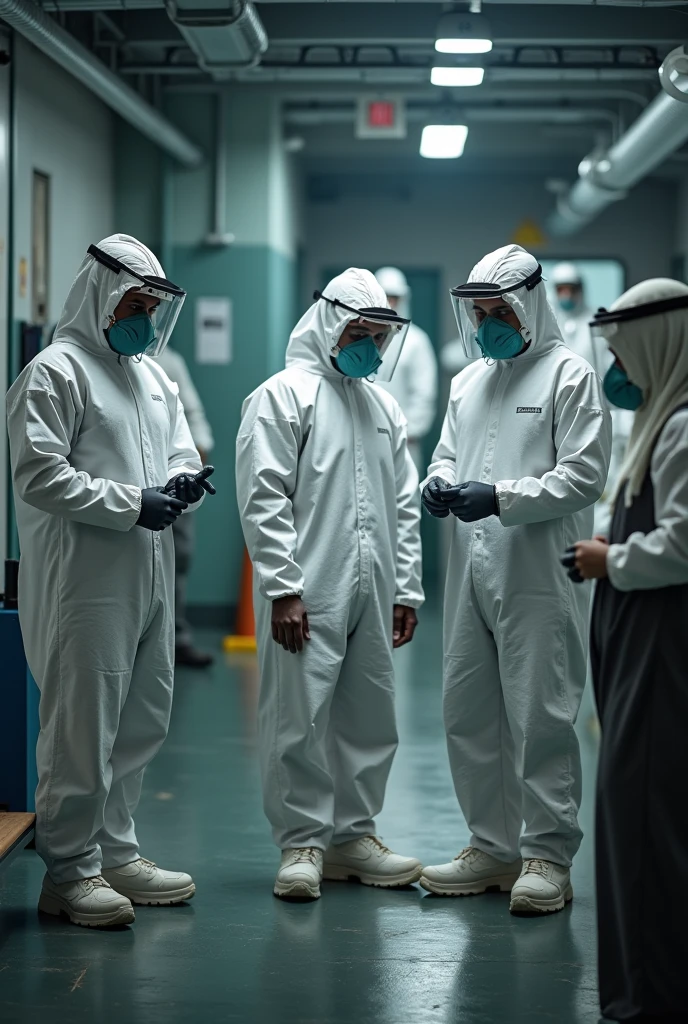
In today’s Saudi Arabia, few major projects are completed without contractors. From NEOM and the Red Sea Project to routine maintenance at industrial facilities, contractor work is integral to operations. However, contractors often account for a disproportionate percentage of workplace incidents. Effective contractor safety management Training creates a framework where all workers—whether employees or contractors—operate under the same safety standards.
Multiple Standards: Different contractors bring different safety practices
Language and Cultural Barriers: Communication challenges in multilingual workforces
Short-Term Mindset: Contractors focused on completing specific tasks quickly
Lack of Site Familiarity: Contractors unfamiliar with specific site hazards
Accountability Gaps: Uncertainty about who is responsible for safety oversight
Global Arab’s contractor safety management Training addresses these challenges through a systematic approach:
1. Pre-Qualification and Selection
Safety Criteria Development: What safety performance standards contractors must meet
Documentation Review: Evaluating contractors’ safety programs, incident rates, and training records
Financial Pre-Qualification: Ensuring contractors can financially support safety requirements
2. Pre-Work Planning and Coordination
Joint Risk Assessment: Host and contractor collaboratively identifying hazards
Method Statement Review: Ensuring work methods are safe and appropriate
Permit-to-Work Systems: Standardized procedures for high-risk activities
Interface Management: Coordinating between multiple contractors on the same site
3. Orientation and Site-Specific Training
Site Induction Programs: Consistent orientation for all workers entering the site
Hazard Communication: Clearly communicating unique site hazards
Emergency Procedures: Ensuring all workers know emergency protocols
Language Considerations: Effective communication in multilingual environments
Ongoing Supervision and Monitoring
Competent Supervision: Training host company supervisors in contractor oversight
Behavioral Observations: Systematic observation of work practices
Performance Metrics: Tracking leading and lagging safety indicators
Joint Inspections: Host and contractor personnel inspecting together
5. Communication and Relationship Management
Regular Safety Meetings: Including contractor representatives
Issue Resolution Processes: Clear procedures for addressing safety concerns
Recognition Programs: Acknowledging good safety performance by contractors
Contract Language: Ensuring contracts clearly define safety expectations and responsibilities
6. Post-Work Evaluation
Performance Review: Evaluating contractor safety performance after project completion
Lessons Learned: Capturing improvements for future contractor management
Database Maintenance: Keeping records of contractor performance for future selection
“Managing seven different contractors on our Jubail expansion project was a safety nightmare until we implemented Global Arab’s contractor safety management Training,” says Project Director Khalid Al-Mutairi. “We had different standards, conflicting procedures, and communication breakdowns. The training gave us a unified system. Now all contractors go through the same orientation, use the same permits, attend the same safety meetings, and are held to the same standards. Our contractor incident rate dropped by 65% in the first year.”
Our contractor safety management Training addresses issues particularly relevant to Saudi Arabia:
Cultural Integration: Respecting different cultural approaches to safety while maintaining standards
Heat Management: Coordinating work schedules and breaks during extreme temperatures
Ramadan Considerations: Adjusting work practices during the holy month
Local Content Requirements: Balancing Vision 2030 localization goals with safety standards
The true power of these safety components emerges when they work together as an integrated system:
Scenario: A contractor team arrives to install equipment at a manufacturing plant in Dammam.
Manual Handling Training Courses ensure they use proper techniques when moving heavy components, preventing musculoskeletal injuries.
A comprehensive personal protective equipment (PPE) guide ensures they wear appropriate protection for the specific hazards (chemical, electrical, fall) present during installation.
Effective contractor safety management Training ensures they’ve been properly oriented to site-specific hazards, understand emergency procedures, and are monitored according to consistent standards.
Remove any one element, and the safety system becomes vulnerable. Together, they create comprehensive protection
Phase 1: Assessment and Planning (Weeks 1-4)
Current State Analysis: Evaluating existing manual handling practices, PPE programs, and contractor management
Gap Identification: Where are the biggest vulnerabilities?
Priority Setting: Which area should be addressed first based on risk?
Custom Program Development: Tailoring Global Arab’s training to your specific organization
Phase 2: Foundation Building (Weeks 5-12)
Leadership Training: Ensuring management understands and supports the initiatives
Pilot Programs: Testing approaches in one department or location
Material Development: Creating organization-specific manuals, checklists, and tools
Train-the-Trainer Programs: Building internal capability for sustainability
Phase 3: Full Implementation (Months 4-9)
Rollout of Manual Handling Training Courses to targeted employee groups
Implementation of PPE management based on our personal protective equipment (PPE) guide
Application of contractor safety management Training principles to contractor operations
Integration of systems so they work together seamlessly
Phase 4: Continuous Improvement (Ongoing)
Performance Measurement: Tracking injury rates, near misses, and compliance
Regular Refresher Training: Keeping skills and knowledge current
System Audits: Periodically evaluating effectiveness
Adaptation: Adjusting programs based on changing operations or regulations
Local Expertise with Global Standards
Our trainers understand Saudi work environments, regulations, and cultural contexts while maintaining internationally recognized training standards.
Practical, Hands-On Approach
We believe safety is learned by doing. Our Manual Handling Training Courses involve actual lifting, our personal protective equipment (PPE) guide training includes equipment practice, and our contractor safety management Training uses realistic scenarios.
Measurable Results Focus
We help organizations track key metrics before and after implementation to demonstrate return on investment in safety training.
We deliver internationally recognized safety training and professional inspection solutions.
From workplace safety to equipment compliance, our certified experts ensure quality and trust.
Serving Saudi Arabia and the Gulf region with global standards.
Your safety, knowledge, and success are our priority.
