Mastering Critical Workplace Hazards: Chemical, Atmospheric, and Heat Safety in Saudi Arabia
Home / Chemical Safety, Gas Testing & Heat Stress Prevention Training
Home / Chemical Safety, Gas Testing & Heat Stress Prevention Training
In the vast industrial landscapes of Saudi Arabia—from the sprawling petrochemical complexes of Jubail to the construction sites reshaping Riyadh’s skyline—workers face dangers that are often invisible to the naked eye. Toxic vapors that offer no warning scent, flammable gases that can ignite in an instant, and relentless heat that silently overwhelms the body’s defenses represent some of the most pervasive risks in the kingdom’s workplaces. Yet these hazards share a common solution: specialized, practical training that transforms awareness into actionable protection.
At Global Arab, we’ve dedicated ourselves to confronting these invisible threats through three essential training disciplines: comprehensive Chemical Safety Training, precise Gas Testing Courses, and vital Heat Stress Prevention Training. This isn’t just about regulatory compliance—it’s about equipping Saudi Arabia’s workforce with the knowledge and skills to recognize, assess, and control hazards that don’t always announce their presence until it’s too late.
As Saudi Arabia advances toward its Vision 2030 goals with accelerated industrial development and ambitious construction projects, the need for this specialized safety knowledge has never been more critical. Whether in oil and gas, manufacturing, construction, or utilities, workers deserve protection based on science, systems, and practical competence. This guide explores how investing in these three interconnected training areas creates safer workplaces, more resilient operations, and ultimately, saves lives across the kingdom.
Saudi Arabia’s unique environmental and industrial conditions create specific challenges:
Climate Factors: Extreme summer temperatures regularly exceeding 45°C (113°F) dramatically increase both chemical exposure risks and heat stress vulnerability. Heat accelerates chemical reactions, increases vaporization of volatile substances, and reduces the effectiveness of personal protective equipment.
Industrial Concentration: The kingdom hosts some of the world’s largest hydrocarbon processing facilities, where complex chemical processes and atmospheric hazards are inherent to operations.
Vision 2030 Projects: Mega-construction projects like NEOM, Qiddiya, and the Red Sea Project involve thousands of workers in environments where atmospheric testing and heat management are daily necessities.
Regulatory Evolution: Saudi Arabia’s safety regulations are increasingly aligning with international standards, requiring documented competence in chemical management, atmospheric monitoring, and heat stress prevention.
At Global Arab, our training programs are specifically designed for these Saudi realities. We don’t just teach international standards—we teach how to apply them effectively in the kingdom’s unique work environments.
Chemicals are the building blocks of modern industry, but they’re also among the most significant workplace hazards. Proper Chemical Safety Training moves far beyond simply reading warning labels or safety data sheets. It’s about understanding how chemicals behave, how they interact with the human body and environment, and how to manage them through their entire lifecycle—from delivery through use to disposal.
At Global Arab, we’ve developed our Chemical Safety Training based on a simple principle: workers should understand chemicals well enough to respect them appropriately—neither fearing them unnecessarily nor underestimating their risks. Our curriculum builds this understanding through four interconnected modules:
Module 1: Chemical Fundamentals for Non-Chemists
Basic toxicology: Understanding routes of entry (inhalation, skin absorption, ingestion), acute vs. chronic effects, and exposure limits specific to Saudi workplace regulations
Hazard classification: Going beyond GHS pictograms to understand what “flammable,” “corrosive,” “toxic,” and “reactive” actually mean in practical terms
Chemical interactions: Learning which common chemicals become dangerous when mixed (a critical consideration in maintenance and cleaning operations)
Saudi-specific considerations: How extreme heat affects chemical storage, handling, and personal protective equipment effectiveness
Module 2: Practical Risk Assessment and Control
Hierarchy of controls applied to chemicals: When elimination isn’t possible, what engineering controls, administrative controls, and PPE are most effective?
Task-specific chemical assessment: Moving beyond generic assessments to evaluate actual use scenarios common in Saudi industries
Control measure verification: Learning to check that ventilation systems actually work, that storage compatibility is maintained, and that PPE is appropriate for the specific chemical
Emergency preparedness: First aid measures that actually help (and common misconceptions that can make situations worse)
Module 3: Safe Handling and Storage Practices
Proper decanting and transfer techniques that minimize spills and exposures
Storage compatibility and segregation based on chemical properties rather than just labeling
Waste management and disposal compliance with Saudi environmental regulations
Decontamination procedures for equipment, surfaces, and personnel
Module 4: Chemical Emergency Response
Spill response protocols scaled to spill size and hazard level
Leak containment and control for different types of containers and piping systems
Evacuation vs. shelter-in-place decisions for chemical releases
Communication protocols during chemical emergencies in multilingual work environments
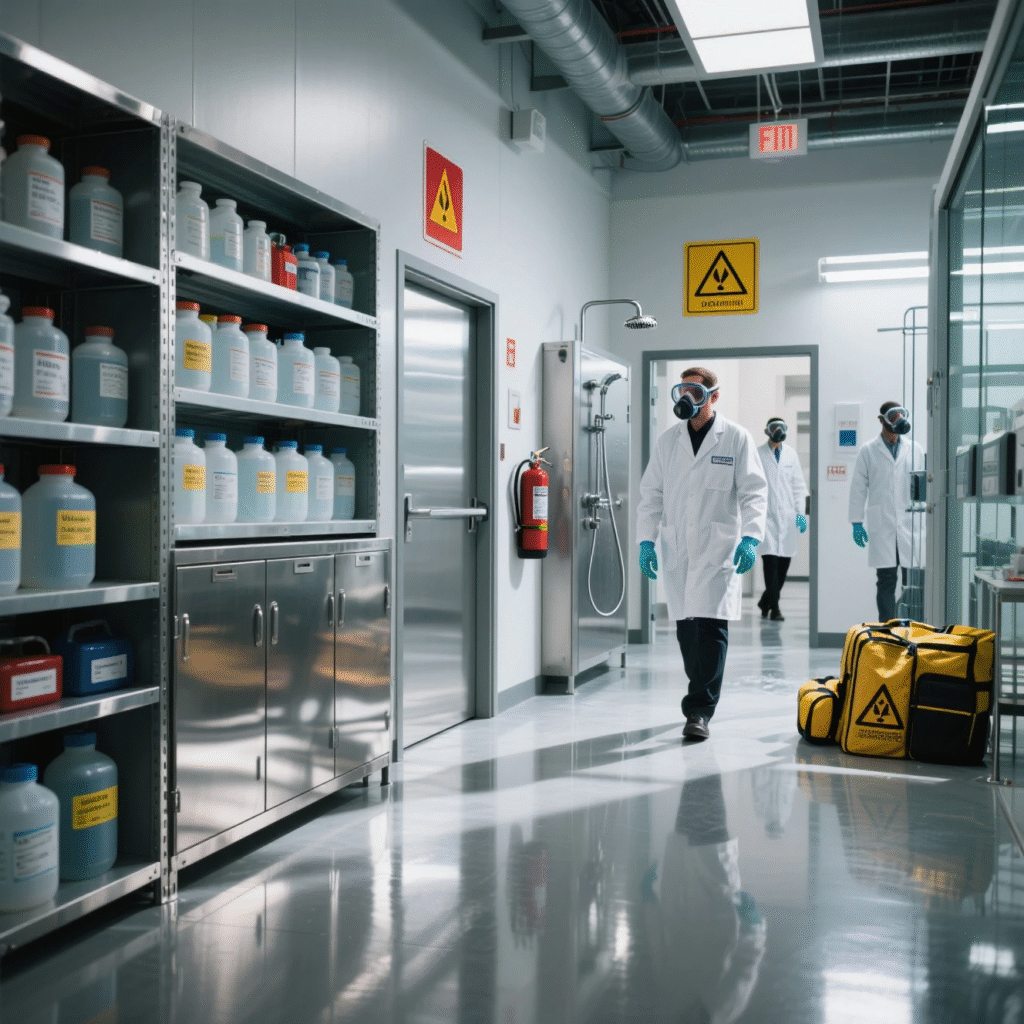
Our Chemical Safety Training at Global Arab emphasizes industry-specific applications:
For Petrochemical and Oil & Gas Workers:
Hydrocarbon-specific hazards including benzene, hydrogen sulfide, and various process chemicals
Process safety interface where chemical safety meets system integrity
Turnaround and maintenance chemistry—managing chemical risks during non-routine operations
Contractor chemical management on multi-company sites
For Construction and Maintenance Teams:
Construction chemical hazards from adhesives and coatings to concrete additives and cleaning agents
Chemical risks during demolition (asbestos, lead, silica, and historical contaminants)
Confined space chemical considerations where ventilation is limited
Hot work chemical interactions—what nearby chemicals might ignite or decompose?
For Manufacturing and Industrial Operations:
Batch process chemical safety for mixing and formulation operations
Machine-related chemical hazards from cutting fluids, lubricants, and coolants
Warehouse and logistics chemical safety including segregation during storage and transport
Laboratory chemical safety for QC and R&D facilities
“Before Global Arab’s Chemical Safety Training, we treated all chemicals with the same basic precautions,” recalls Faisal Al-Otaibi, a maintenance supervisor at a Yanbu industrial facility. “Now my team understands the specific properties of the twenty chemicals we use regularly. We’ve redesigned our storage, changed our PPE for certain tasks, and implemented proper ventilation where we didn’t realize it was needed. Most importantly, our workers now ask intelligent questions about chemical risks before starting tasks.”
For organizations ready to move beyond foundational chemical safety, Global Arab offers advanced modules that address complex scenarios common in Saudi industries.
Chemical Reaction Hazards: When Mixing Becomes Dangerous
Many workplace chemical incidents occur not from the chemicals themselves, but from unintended reactions between them. Our advanced Chemical Safety Training covers:
| Chemical Combination | Potential Hazard | Common Workplace Scenario |
|---|---|---|
| Acids + Bases | Violent reaction, heat generation, toxic gas release | Cleaning operations where different products are used sequentially |
| Bleach + Ammonia | Toxic chloramine gas production | Bathroom cleaning in facilities with multiple cleaning products |
| Water + Concentrated Sulfuric Acid | Explosive boiling, acid aerosol release | Battery maintenance, laboratory operations |
| Oxidizers + Organic Materials | Fire, explosion risk | Chemical storage areas, waste disposal containers |
Chemical Incompatibility: Storage Segregation Requirements
Saudi regulations require specific segregation for incompatible chemicals. Our training covers the seven hazard classes and their storage requirements:
In many Saudi workplaces, the air itself can become the hazard. Toxic gases, oxygen deficiency, and explosive atmospheres pose invisible threats that can incapacitate or kill within breaths. Gas Testing Courses provide the essential skills to detect these atmospheric hazards before they harm workers. At Global Arab, we approach gas testing not as a simple instrument-reading skill, but as a scientific discipline fundamental to safe entry and work in potentially hazardous atmospheres.
Gas-related incidents continue to claim lives in workplaces worldwide, often despite the presence of gas detection equipment. Why? Because equipment alone isn’t enough. Effective atmospheric safety requires:
Understanding what you’re testing for based on the work environment and history
Knowing how to use equipment properly—including its limitations and potential failures
Interpreting results correctly and making appropriate decisions based on those results
Recognizing when conditions change and retesting is necessary
Properly maintaining and calibrating equipment to ensure reliable readings
Our Gas Testing Courses at Global Arab address these competencies through a structured, hands-on approach.
Module 1: Gas Fundamentals and Hazard Recognition
Common hazardous gases in Saudi workplaces: Hydrogen sulfide (H2S), carbon monoxide, flammable gases (LEL), oxygen deficiency, and volatile organic compounds
Gas properties and behavior: Density (does it sink or rise?), detection methods, and exposure effects
Confined space atmospheric hazards: Why confined spaces require special testing protocols
Industrial process-specific gas hazards: What gases are generated or released in different operations
Module 2: Gas Detection Technology and Instrumentation
Types of detectors: Diffusion vs. pumped, single-gas vs. multi-gas, portable vs. fixed systems
Sensor technology limitations: What each sensor type can and cannot detect, cross-sensitivities, and environmental influences
Proper instrument use: Start-up procedures, bump testing, calibration, and functional checks
Interpreting readings: Understanding measurement units, alarm levels, and time-weighted averages
Module 3: Testing Protocols and Procedures
Pre-entry testing requirements: How to properly test a space before entry
Continuous monitoring protocols: When and why continuous monitoring is required
Strategic sampling techniques: Where to sample in a space (top, middle, bottom, corners)
Retesting triggers and frequency: When conditions change and retesting becomes necessary
Documentation and record keeping: Creating legally defensible testing records
Module 4: Emergency Response and Rescue Considerations
Alarm response procedures: What to do when an alarm activates
Rescue implications: How atmospheric conditions affect rescue planning and execution
Equipment limitations in emergencies: Understanding what happens to detectors in extreme conditions
Communication protocols: Effectively communicating atmospheric hazards and changes
Different Saudi industries present distinct atmospheric testing challenges:
For Confined Space Operations:
Multi-gas testing requirements for confined space entry permits
Stratified atmosphere testing in deep excavations, tanks, and vessels
Purging and ventilation verification through atmospheric testing
Hot work atmospheric considerations in confined spaces
For Oil, Gas, and Petrochemical Facilities:
H2S-specific monitoring protocols for sour environments
Area classification and monitoring in potentially explosive atmospheres
Process leak detection and monitoring
Turnaround and maintenance atmospheric hazards
For Construction and Demolition Sites:
Historical contamination assessment in older structures
Welding and cutting fume monitoring
Soil and groundwater vapor intrusion monitoring during excavation
Underground utility and trench atmospheric hazards
For Wastewater and Municipal Operations:
Biological process gas generation (methane, hydrogen sulfide)
Collection system atmospheric hazards
Treatment plant specific monitoring needs
“The difference between checking a gas meter and truly understanding atmospheric monitoring is profound,” explains Sarah Al-Mansour, a safety officer at a Riyadh industrial plant. “After Global Arab’s Gas Testing Courses, our permit issuers don’t just look for green lights—they understand what each reading means for the work being planned. We’ve prevented several potential incidents because our testers recognized unusual atmospheric patterns and investigated further before allowing entry.”
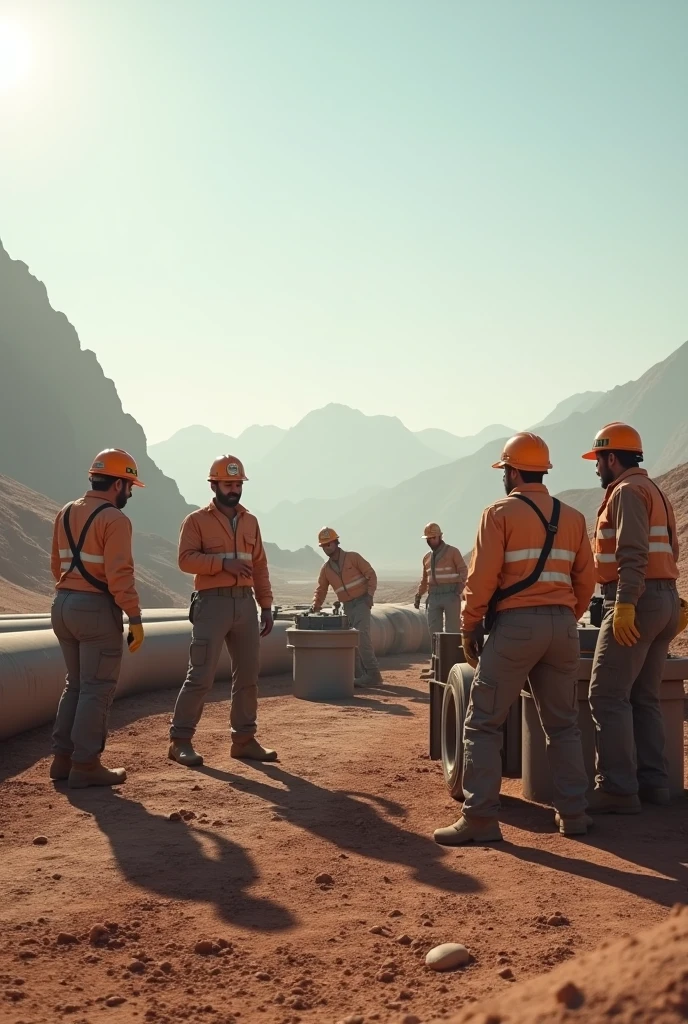
With summer temperatures regularly exceeding levels that would halt outdoor work in many countries, Heat Stress Prevention Training isn’t just important in Saudi Arabia—it’s essential for survival. At Global Arab, we approach heat stress not as an inevitable condition to be endured, but as a preventable occupational illness that requires systematic management.
Heat-related illness occurs when the body’s cooling mechanisms are overwhelmed. In Saudi Arabia’s climate, this risk is compounded by:
High ambient temperatures often above safe working limits
Intense solar radiation adding radiant heat load
Low humidity accelerating dehydration even when workers don’t feel sweaty
Cultural clothing considerations that may affect heat dissipation
Fasting during Ramadan creating additional physiological stress
Our Heat Stress Prevention Training addresses these factors through a comprehensive approach that balances worker health with operational realities.
Module 1: Physiology of Heat Stress
How the body manages heat: Understanding core temperature regulation, sweating mechanisms, and cardiovascular responses
The heat stress spectrum: From heat rash and heat cramps to heat exhaustion and life-threatening heat stroke
Individual risk factors: Age, fitness, acclimatization, medical conditions, and medications
Environmental factors: Temperature, humidity, radiant heat, and air movement
Module 2: Heat Stress Recognition and Monitoring
Early warning signs: Recognizing symptoms in yourself and coworkers
Monitoring techniques: Wet bulb globe temperature (WBGT) measurement and interpretation
Physiological monitoring: Heart rate, core temperature, and hydration status checks
Environmental assessment: Identifying high-risk areas and operations
Module 3: Control Measures and Work Practices
Engineering controls: Shade, ventilation, cooling systems, and equipment modifications
Administrative controls: Work-rest cycles, job rotation, scheduling adjustments, and pacing
PPE considerations: Cooling vests, breathable fabrics, and protective equipment trade-offs
Hydration strategies: Proper fluid replacement before, during, and after work
Acclimatization programs: Gradually building heat tolerance for new and returning workers
Module 4: Emergency Response for Heat Illness
First aid for heat-related conditions: Appropriate responses for each level of heat illness
Cooling techniques: From simple shaded rest to aggressive cooling for heat stroke
When to seek medical attention: Clear protocols for escalating care
Post-incident management: Return-to-work considerations after heat illness
Our Heat Stress Prevention Training at Global Arab includes specific modules for Saudi cultural and seasonal factors:
Ramadan-Specific Protocols:
Risk assessment adjustments for fasting workers
Modified work schedules to minimize exposure during high-risk periods
Hydration strategies for non-fasting hours
Enhanced monitoring during the holy month
Seasonal Adaptation Strategies:
Pre-summer preparation programs as temperatures begin rising
Peak summer emergency protocols for heat waves
Gradual re-acclimatization as workers return from leave
Project planning considerations for seasonal temperature variations
Effective heat stress prevention requires more than training—it requires systematic implementation:
For Construction and Outdoor Operations:
Site-specific heat stress management plans
Mobile shade and cooling stations
Hydration supply and monitoring systems
Weather monitoring and alert protocols
For Industrial and Manufacturing Facilities:
Hot process area controls (furnaces, kilns, smelters)
PPE heat stress considerations for chemical protection or arc flash gear
Indoor heat assessment in poorly ventilated areas
Maintenance work in heated areas protocols
For Oil, Gas, and Petrochemical Operations:
Desert operation specific challenges
Turnaround and maintenance heat stress planning for intensive outdoor work periods
Remote location considerations where medical care is distant
Contractor heat stress management on large sites
“Heat stress was always our biggest summer challenge,” says Khalid Al-Ghamdi, project manager for a Jeddah construction firm. “After implementing Global Arab’s Heat Stress Prevention Training program, we transformed from reactive—treating collapsed workers—to proactive. Now we predict high-risk days, adjust schedules before problems occur, and our workers understand their own physiological warning signs. Last summer, we had zero serious heat incidents despite record temperatures.”
In real Saudi workplaces, these hazards rarely occur in isolation. Our training at Global Arab emphasizes their dangerous interactions:
High temperatures increase chemical vaporization, raising inhalation risks
Heat accelerates chemical decomposition, potentially creating new hazards
PPE for chemical protection often increases heat stress risk
Sweating skin may increase absorption of certain chemicals
Some gas detection equipment has temperature limitations
Hot environments can affect atmospheric stratification and gas behavior
Heat stress symptoms can mimic chemical exposure symptoms (headache, dizziness, nausea)
Emergency response in hot conditions requires special considerations
Chemical spills can create immediate atmospheric hazards
Some chemical processes intentionally or accidentally produce hazardous gases
Proper chemical storage prevents atmospheric contamination
Gas testing informs chemical handling precautions
Understanding how chemical, atmospheric, and heat hazards interact is theoretical until you see it in practice. Here are real scenarios from Saudi workplaces where these hazards combined—and how proper training prevented disasters.
Scenario 1: The Maintenance Pit (Jubail Industrial City)
A maintenance team prepared to enter a pump pit for routine repairs. The permit writer had completed Gas Testing Courses and conducted initial atmospheric monitoring, finding acceptable oxygen levels and no detectable gases. However, a worker who had completed Heat Stress Prevention Training noticed that the pit felt unusually warm—warmer than ambient temperature.
Using principles from Chemical Safety Training, he questioned whether a nearby chemical process could be heating the pit’s atmosphere. Additional testing revealed that a slow chemical leak was displacing oxygen and generating toxic vapors that only became detectable when the pit heated up. The combination of atmospheric monitoring, chemical awareness, and heat observation prevented a potentially fatal entry.
Scenario 2: The Outdoor Storage Area (Eastern Province)
During a summer heat wave, workers were moving chemical drums in an outdoor storage yard. A supervisor with Heat Stress Prevention Training recognized early signs of heat exhaustion in one worker. But because he also understood chemical safety, he knew that heat stress symptoms (dizziness, nausea, confusion) could also indicate chemical exposure.
He evacuated the area, had the worker evaluated by medical staff, and requested atmospheric monitoring. While the worker was diagnosed with heat exhaustion, the response protocol revealed that a leaking drum was generating low-level vapors that would have gone undetected without proper monitoring. The incident led to improved storage segregation and additional Gas Testing Courses for the yard crew.
Scenario 3: The Confined Space (Riyadh Construction Site)
A confined space entry was authorized based on morning atmospheric testing showing safe conditions. By afternoon, with temperatures exceeding 48°C, the space felt increasingly uncomfortable. The attendant, trained in all three disciplines, recognized multiple warning signs: the confined space monitor showed oxygen levels trending downward, the worker inside reported unusual smells, and heat was clearly a factor.
Using his Gas Testing Courses knowledge, he initiated a second atmospheric test before the worker’s scheduled exit. The test revealed flammable vapor accumulation caused by a nearby hot work operation that had heated residual chemicals in the space. The attendant ordered an immediate evacuation, preventing what could have been a catastrophic explosion.
Key Takeaway: These scenarios demonstrate why integrated training is essential. Workers who understand only one hazard type miss the dangerous interactions that create the greatest risks. Global Arab’s comprehensive approach ensures your team recognizes the full hazard picture.
For organizations ready to move beyond foundational chemical safety, Global Arab offers advanced modules that address complex scenarios common in Saudi industries.
Chemical Reaction Hazards: When Mixing Becomes Dangerous
Many workplace chemical incidents occur not from the chemicals themselves, but from unintended reactions between them. Our advanced Chemical Safety Training covers:
| Chemical Combination | Potential Hazard | Common Workplace Scenario |
|---|---|---|
| Acids + Bases | Violent reaction, heat generation, toxic gas release | Cleaning operations where different products are used sequentially |
| Bleach + Ammonia | Toxic chloramine gas production | Bathroom cleaning in facilities with multiple cleaning products |
| Water + Concentrated Sulfuric Acid | Explosive boiling, acid aerosol release | Battery maintenance, laboratory operations |
| Oxidizers + Organic Materials | Fire, explosion risk | Chemical storage areas, waste disposal containers |
Chemical Incompatibility: Storage Segregation Requirements
Saudi regulations require specific segregation for incompatible chemicals. Our training covers the seven hazard classes and their storage requirements:
Flammable Liquids: Store away from oxidizers, acids, and heat sources
Oxidizers: Isolate from flammables, organics, and combustible materials
Acids: Separate from bases, oxidizers, and reactive metals
Bases: Separate from acids and organic peroxides
Toxics: Store in secured, well-ventilated areas away from food handling
Reactive Chemicals: Isolate from water, heat, shock, and incompatible materials
Compressed Gases: Secure cylinders separately by hazard class (flammable, oxidizer, toxic, inert)
Chemical Exposure Monitoring and Health Surveillance
Beyond spill prevention, advanced chemical safety includes health surveillance. Our training covers:
Biological monitoring: Testing blood, urine, or breath for chemical absorption indicators
Medical surveillance programs: Required for workers exposed to specific chemicals (lead, benzene, silica, asbestos)
Exposure record keeping: Maintaining legally required exposure records for 30+ years
Health effect recognition: Understanding symptoms of chronic chemical exposure before they become serious
Chemical Safety for Maintenance and Turnaround Operations
Saudi Arabia’s industrial maintenance periods (turnarounds, shutdowns, outages) present unique chemical risks:
Process residue hazards: Chemicals remaining in equipment after draining
Inhibitor loss: Chemicals that become hazardous when stabilizers are removed
Cleaning chemical interactions: New chemicals introduced during cleaning reacting with residues
Waste chemical management: Proper handling of sludge, scale, and contaminated materials
Begin with an honest evaluation of your current capabilities:
For Chemical Safety:
Do workers understand the specific hazards of chemicals they use?
Are Safety Data Sheets accessible and understood?
Is chemical storage properly segregated and controlled?
Are appropriate engineering controls and PPE in place and used correctly?
For Atmospheric Safety:
Are gas detectors available where needed and properly maintained?
Are testing protocols followed consistently?
Do testers understand what they’re testing for and why?
Are test results properly documented and acted upon?
For Heat Stress Prevention:
Do you monitor environmental conditions (WBGT)?
Are work-rest schedules appropriate for conditions?
Is hydration actively managed?
Can workers recognize heat stress symptoms?
Based on your assessment, Global Arab can help develop a phased approach:
Phase 1: Foundation Building
Basic Chemical Safety Training for all chemical handlers
Essential Gas Testing Courses for confined space entrants and attendants
Core Heat Stress Prevention Training for supervisors and outdoor workers
Phase 2: Competency Development
Advanced chemical safety for high-risk operations
Comprehensive gas testing for permit issuers and safety personnel
Heat stress program implementation for safety officers
Phase 3: Integration and Leadership
Combined hazard assessment training
Program auditing and continuous improvement
Train-the-trainer programs for sustainability
Practical, Saudi-Focused Training:
Our programs use Saudi case studies, address local regulations, and consider cultural factors. We train in both Arabic and English to ensure comprehension.
Experienced Industrial Trainers:
Our instructors are veterans of Saudi industry who bring real-world experience, not just theoretical knowledge.
Hands-On Learning Approach:
We believe competence comes from doing. Our Gas Testing Courses involve real equipment and simulated scenarios. Our Chemical Safety Training includes practical handling exercises. Our Heat Stress Prevention Training involves physiological monitoring practice.
Ongoing Support and Resources:
Training with Global Arab includes access to reference materials, toolkits, and our instructor support for post-training questions.
Alignment with Saudi Standards:
Our programs meet and exceed Saudi regulatory requirements while preparing organizations for international compliance.
Identify which hazards are most relevant to your industry and role
Start with foundational training in that area
Apply your learning immediately to demonstrate value
Progress to advanced certifications to maximize career opportunities
Conduct hazard assessments to identify priority training needs
Start with high-risk roles and operations
Implement systems to support trained behaviors
Measure effectiveness through leading indicators
Expand training based on demonstrated needs and results
Proper training in chemical, atmospheric, and heat hazards delivers measurable returns:
Reduced incident rates and associated costs
Lower absenteeism from preventable illnesses
Improved productivity through better work planning
Enhanced regulatory compliance and reduced penalty risks
Stronger reputation with clients and partners
Better workforce morale and retention
“The most expensive safety training is the training you don’t provide,” notes Global Arab’s Training Director, Dr. Amina Rashid. “When we calculate the true cost of a chemical exposure incident, a gas-related fatality, or a heat stroke case—including medical costs, investigation time, lost productivity, reputational damage, and human suffering—the investment in proper training is clearly justified. But more importantly, it’s the right thing to do for the people who build and operate Saudi Arabia.”
The invisible hazards in Saudi workplaces won’t disappear on their own. They require knowledgeable workers, systematic controls, and vigilant monitoring. Global Arab provides the training foundation for all three.
Take action now to protect your workforce:
Visit GlobalArab.com.sa to explore our complete training calendar for Chemical Safety Training, Gas Testing Courses, and Heat Stress Prevention Training
Download our Hazard Assessment Toolkit to evaluate your current risks
Register for an upcoming course at our Riyadh, Jeddah, Dammam, or Jubail training centers
Contact our training advisors for a customized organizational training plan
Enroll your team in the programs that address your highest priority hazards
Don’t wait for an incident to reveal the gaps in your hazard control program. Proactive training with Global Arab builds the competence and confidence needed to work safely with chemicals, in hazardous atmospheres, and under Saudi Arabia’s challenging climate conditions.
Join the Saudi companies and professionals who trust Global Arab for hazard-specific safety training. Visit our website, contact our team, and enroll today.
Your commitment to comprehensive hazard training protects your most valuable asset: your people. Make that commitment with Global Arab.
We deliver internationally recognized safety training and professional inspection solutions.
From workplace safety to equipment compliance, our certified experts ensure quality and trust.
Serving Saudi Arabia and the Gulf region with global standards.
Your safety, knowledge, and success are our priority.
