Home / Safety Officer, Risk Assessment & Permit to Work Training
Across Saudi Arabia’s dynamic landscape—from the futuristic rise of NEOM to the expansion of traditional industrial heartlands—a quiet revolution is taking place. It’s not just about building faster or taller; it’s about building safer. As the kingdom charges toward its ambitious Vision 2030 goals, the demand for skilled safety professionals has never been greater. At the core of this transformation are three critical educational pillars: comprehensive Safety Officer Training, meticulous Risk Assessment Courses, and precise Permit to Work Training.
At Global Arab, we’ve witnessed this evolution firsthand. For years, we’ve partnered with Saudi companies and ambitious professionals to build robust safety cultures from the ground up. We understand that true safety leadership isn’t born from policy documents alone—it’s cultivated through practical knowledge, systematic thinking, and certified competence. This blog explores how investing in these three fundamental training areas doesn’t just meet compliance requirements; it builds the resilient, proactive safety leadership that Saudi Arabia’s future projects demand.
Saudi Arabia’s safety regulations have undergone significant transformation, aligning with both Vision 2030’s quality-of-life objectives and international best practices. What was once considered sufficient—basic awareness and reactive measures—is no longer adequate for the kingdom’s world-class ambitions. Today, leading Saudi companies, especially those working on giga-projects or with international partners, require:
Certified safety professionals with recognized qualifications
Proactive risk management systems rather than reactive problem-solving
Standardized control systems for high-risk work activities
Documented competence at all levels of safety responsibility
This is where specialized training becomes your strategic advantage. Whether you’re an individual aiming to advance your career or an organization building a safety culture, understanding the synergy between Safety Officer Training, Risk Assessment Courses, and Permit to Work Training is your first step toward excellence.
The role of a safety professional in Saudi Arabia has evolved dramatically. No longer simply inspectors or checklist administrators, today’s safety officers are strategic partners in operational excellence. Effective Safety Officer Training must therefore balance technical knowledge with leadership skills, regulatory expertise with practical problem-solving abilities.
At Global Arab, our approach to Safety Officer Training recognizes that Saudi Arabia needs safety leaders who can both understand international standards and apply them within local contexts. Our curriculum builds capability across four critical dimensions:
Technical Competence & Regulatory Knowledge:
Saudi Arabian Regulations: Detailed understanding of the Saudi Occupational Safety and Health Law and its implementing regulations, plus industry-specific standards (Saudi Aramco, SABIC, etc.)
International Standards Framework: Working knowledge of ISO 45001, OHSAS 18001, and how they interface with local requirements
Hazard-Specific Expertise: Deep knowledge of regional priority risks—working at height in construction, process safety in hydrocarbons, heat stress management in desert environments
Incident Investigation Methodology: Moving beyond blame-finding to root cause analysis that prevents recurrence
Practical Application & Workplace Skills:
Safety Management Systems: How to develop, implement, and maintain effective safety systems tailored to organizational size and risk profile
Communication Techniques: Especially important in Saudi Arabia’s multicultural workplaces—how to effectively communicate safety requirements to diverse workforces
Inspection & Audit Competence: Conducting meaningful inspections that identify systemic issues rather than just superficial problems
Emergency Preparedness: Developing and testing realistic emergency response plans for Saudi facilities
Leadership & Influence Skills:
Building Safety Culture: Practical strategies for moving beyond compliance to cultivating genuine safety values
Engaging Management: Communicating safety needs in business terms that resonate with decision-makers
Training & Coaching Skills: Developing the ability to build capability in others, not just enforce rules
Career Development Pathways:
Understanding Certification Options: Guidance on NEBOSH, IOSH, OSHA certifications and their relevance in the Saudi market
Specialization Opportunities: Directions for focusing on construction, oil and gas, manufacturing, or healthcare safety
Professional Development Planning: Creating a career roadmap in Saudi Arabia’s growing safety profession


What distinguishes effective Safety Officer Training? Based on our experience training thousands of safety professionals across Saudi Arabia, we’ve identified several key differentiators:
Contextualized Learning for Saudi Arabia:
Our Safety Officer Training doesn’t just teach international principles; we show how to apply them in Saudi workplaces. Case studies come from local projects. Regulatory references include Saudi-specific requirements. Even our examples of effective communication consider the cultural dynamics of Saudi work environments.
Balance of Theory and Practice:
We believe safety officers learn best by doing. Our training includes:
Simulated workplace scenarios where trainees must apply their knowledge
Real inspection exercises using actual equipment and facilities
Role-playing difficult conversations with workers or managers about safety issues
Developing actual safety documents for sample organizations
Building a Professional Network:
When you complete Safety Officer Training with Global Arab, you join a community. Our alumni network connects safety professionals across Saudi Arabia, creating opportunities for knowledge sharing, mentorship, and professional support long after the formal training ends.
Progressive Certification Pathways:
We structure our Safety Officer Training to provide immediate applied knowledge while also building toward recognized certifications. Whether your goal is a NEBOSH International General Certificate or specialized Saudi Aramco safety certifications, our training provides the foundation and guidance for your next steps.
“Before my Safety Officer Training with Global Arab, I saw my job as enforcing rules,” shares Ahmed Al-Mutairi, now a senior HSE advisor for a Riyadh construction firm. “The training transformed my perspective. I learned to be a problem-solver, a communicator, and a business partner. Today, I don’t just identify hazards—I help design them out of our processes entirely.”
If Safety Officer Training develops the professionals who lead safety, then Risk Assessment Courses provide their fundamental methodology. Risk assessment is the systematic process of identifying what could cause harm, evaluating the likelihood and severity of that harm, and determining appropriate control measures. In essence, it’s how safety transitions from reacting to incidents to preventing them.
Saudi Arabia’s regulatory framework increasingly emphasizes the employer’s duty to conduct suitable and sufficient risk assessments. But beyond compliance, systematic risk assessment delivers tangible business benefits:
Financial Protection:
Reduces unexpected downtime from incidents
Lowers insurance premiums through demonstrable risk management
Prevents regulatory fines for uncontrolled hazards
Reduces compensation costs and legal liabilities
Operational Excellence:
Identifies process inefficiencies that also create risks
Provides data-driven justification for safety investments
Creates consistency in how risks are managed across sites
Supports continuous improvement through regular review
Reputational Advantage:
Demonstrates due diligence to clients and partners
Builds workforce confidence in management’s safety commitment
Positions organizations favorably for Vision 2030 project bids
Meets the expectations of international investors and partners
At Global Arab, our Risk Assessment Courses are designed to create competent practitioners, not just theoretical understanding. We focus on building capability in five key areas:
1. Hazard Identification Techniques:
Systematic workplace inspection methods that go beyond the obvious
Job Safety Analysis (JSA) for routine tasks
Process hazard analysis techniques for complex systems
Engaging workers in hazard identification—tapping into frontline knowledge
2. Risk Evaluation and Prioritization:
Qualitative and semi-quantitative risk matrices appropriate to Saudi operations
Understanding likelihood in Saudi contexts (considering factors like workforce experience, extreme temperatures, project pace)
Severity considerations specific to regional operations
Prioritization methods that focus resources on the most significant risks
3. Control Selection and Implementation:
Hierarchy of controls applied to Saudi work environments
Practical engineering control solutions suitable for regional availability and conditions
Administrative control development that actually works in practice
PPE as last resort—selecting and managing effective personal protection
4. Documentation and Communication:
Creating usable, living documents—not paperwork exercises
Visual risk communication for multilingual workforces
Integrating risk assessments into work planning and permitting systems
Digital tools and platforms for efficient risk assessment management
5. Review and Continuous Improvement:
Trigger-based review systems (after incidents, changes, or time periods)
Measuring control effectiveness through leading indicators
Learning from near misses to improve risk assessments
Management review processes that drive improvement
Our Risk Assessment Courses at Global Arab recognize that different Saudi industries face distinct challenges:
For Construction and Mega-Projects:
Dynamic risk assessment for fast-changing sites
Interface risk management between multiple contractors
Extreme weather considerations—heat, sandstorms, flash floods
Logistics and traffic management on congested sites
For Oil, Gas, and Petrochemicals:
Process Safety Management (PSM) and hazard studies (HAZOP, HAZID)
Simultaneous operations (SIMOPS) risk assessment
Hydrocarbon release prevention and control
Contractor risk integration in operating facilities
For Manufacturing and Industrial Operations:
Machinery and equipment risk assessment
Chemical handling and storage in various climate conditions
Ergonomic assessment considering regional workforce characteristics
Utilities and energy isolation risks
“The Risk Assessment Courses at Global Arab changed how our entire organization approaches safety,” says Fatima Al-Harbi, HSE Manager at a Jubail manufacturing facility. “We moved from generic checklists to site-specific, task-focused assessments that our workers actually understand and use. The most significant change wasn’t in our documentation—it was in our conversations during planning meetings. Now we discuss risks before we discuss methods.”

Even with well-trained safety officers and thorough risk assessments, certain tasks remain inherently hazardous. This is where Permit to Work Training becomes critical. A permit to work (PTW) system is a formal, documented procedure that authorizes specific work, at a specific location, for a specific time period—but only after defined precautions have been implemented. It’s the crucial control point for high-risk activities.
Many Saudi organizations have permit to work systems on paper. Yet incidents continue to occur during permit-controlled activities. Our experience at Global Arab reveals common failure points that proper Permit to Work Training addresses:
Common System Failures:
Routineization: Permits become rubber-stamp exercises rather than meaningful reviews
Poor hazard identification: Critical risks are missed during permit preparation
Inadequate isolation: Energy sources aren’t properly isolated before work begins
Communication breakdown: Information isn’t effectively transferred between shifts or between preparation and execution teams
Competence gaps: Personnel don’t understand their roles within the system
Cultural Challenges in Saudi Workplaces:
Authority gradients that discourage juniors from questioning seniors
Multilingual workforces creating communication barriers
Contractor integration challenges with multiple companies on one site
Schedule pressures that tempt shortcuts in the permit process
At Global Arab, our Permit to Work Training focuses on creating competence across all roles in the PTW system. We recognize that effective control requires everyone—from the permit issuer to the performing worker—to understand and fulfill their responsibilities.
For Permit Issuers and Authorizing Persons:
Legal responsibilities and accountabilities under Saudi law
Technical knowledge requirements for authorizing specific work types
Isolation standards and methodologies for different energy sources
Cross-boundary coordination when multiple permits interact
Handback and cancellation procedures to properly close out work
For Performing Workers and Supervisors:
Understanding permit limitations and conditions
Verifying isolations and controls before starting work
Responding to changing conditions during work execution
Stop work authority and when to invoke it
Proper communication at shift handover
For System Design and Management:
Designing effective permit forms that prompt the right considerations
Integrating permits with other systems (risk assessments, maintenance systems, contractor management)
Auditing and measuring permit system effectiveness
Continuous improvement based on permit system performance data
Different hazardous activities require specialized permit understanding. Our Permit to Work Training at Global Arab includes focused modules for:
Hot Work Permits:
Fire risk assessment in various Saudi environments
Atmospheric monitoring for flammable gases or vapors
Fire watch duties and competencies
Specific considerations for hydrocarbon facilities
Confined Space Entry:
Atmospheric testing and monitoring protocols
Entry and rescue equipment requirements
Attendant and rescuer responsibilities
Ventilation and isolation methods for Saudi climate conditions
Electrical Safety and Lockout/Tagout:
Energy isolation procedures meeting Saudi standards
Complex lockout situations with multiple energy sources
Testing for dead procedures and verification
Contractor interface in electrical work permits
Working at Height:
Fall protection systems selection and inspection
Dropped object prevention in multi-level work areas
Weather considerations—wind limits, extreme heat protocols
Rescue planning for elevated work
“Our Permit to Work Training with Global Arab transformed a paper exercise into a life-saving dialogue,” explains Mustafa Khan, Construction Manager at a NEOM project site. “Now when we issue a permit, it’s not about filling boxes—it’s a structured conversation between competent people. We’ve seen a 70% reduction in incidents during permit-controlled work, and our project teams actually appreciate the process rather than resisting it.”
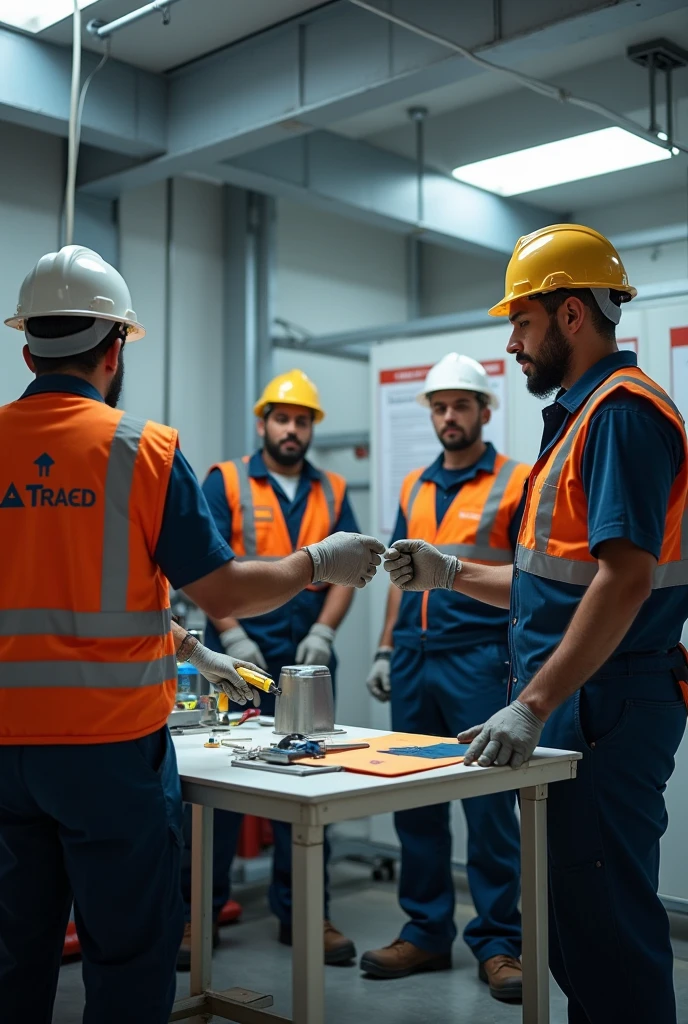
The true power of these three training areas emerges when they work together as an integrated system. At Global Arab, we emphasize these interconnections in all our programs:
Safety Officer Training develops professionals who can champion and manage safety systems
Risk Assessment Courses provide the methodology to identify and prioritize hazards
Permit to Work Training establishes the control framework for high-risk activities
Trained safety officers then audit, review, and improve both risk assessments and permit systems
This creates a continuous improvement cycle where each element reinforces the others.
Consider a common scenario in Saudi construction: welding work on an existing structure.
Without Integrated Training:
A generic risk assessment might identify “fire hazard” but not specify control measures
A permit might be issued without verifying specific isolations
The safety officer might focus on compliance paperwork rather than actual control verification
With Integrated Training from Global Arab:
Risk Assessment: The team conducts a specific assessment identifying not just fire risk but also structural integrity concerns, electrical hazards from nearby circuits, heat stress considerations in Saudi summer, and dropped object risks to areas below.
Permit to Work: Based on the risk assessment, the permit specifies exact electrical isolations needed, fire watch requirements, structural engineer verification needed, and maximum work duration considering heat conditions.
Safety Officer Oversight: The trained safety officer verifies that isolations match the risk assessment, checks fire watch competence, monitors heat stress controls, and ensures the work stays within permit boundaries.
This integrated approach doesn’t just prevent incidents—it creates predictable, efficient, high-quality work execution.
Every organization and individual starts from a different point. At Global Arab, we recommend beginning with honest assessment:
For Organizations:
How many of your safety personnel have formal Safety Officer Training?
Are your risk assessments proactive and specific or generic and reactive?
Is your permit system truly controlling work or just documenting it?
What percentage of incidents occur during tasks that should be permit-controlled?
For Individuals:
What certification level have you achieved in safety?
Can you conduct a comprehensive risk assessment from start to finish?
Do you understand all roles in a permit to work system?
What career path are you targeting in Saudi Arabia’s safety profession
Based on your assessment, Global Arab offers multiple pathways:
Foundational Pathway (For Beginners):
Basic Safety Officer Training to understand roles and responsibilities
Introductory Risk Assessment Courses to learn systematic methodology
Awareness-level Permit to Work Training to understand system principles
Professional Development Pathway (For Practicing Safety Personnel):
Advanced Safety Officer Training focusing on leadership and influence
Specialized Risk Assessment Courses for your specific industry
Competency-based Permit to Work Training for specific permit types
Organizational Transformation Pathway (For Companies):
Integrated training combining all three areas for cross-functional teams
Train-the-trainer programs to build internal capability
System implementation support to apply learning directly to your operations
Choosing the right training provider makes all the difference. Here’s why hundreds of Saudi companies and professionals choose Global Arab:
Local Expertise with Global Standards:
Our trainers are veterans of Saudi industry who understand both international best practices and local implementation realities. We don’t just teach theory—we teach application within Saudi Arabia’s unique regulatory, cultural, and environmental context.
Practical, Experiential Learning:
Our Safety Officer Training includes real leadership challenges. Our Risk Assessment Courses use actual workplace scenarios. Our Permit to Work Training involves simulated permit exercises with real consequences. This approach ensures learning translates directly to workplace competence.
Progressive Certification Pathways:
We structure training to provide immediate applied value while building toward recognized certifications like NEBOSH, IOSH, and ISO 45001 implementation. Your training investment with us moves you toward both competence and credentials.
Ongoing Support Community:
Training with Global Arab means joining a professional community. Our alumni network, continued resource access, and refresher opportunities ensure your learning continues to develop.
Alignment with Vision 2030 Objectives:
Our programs specifically support Saudi Arabia’s national goals by:
Developing Saudi safety talent for leadership roles
Building safety cultures that attract international investment
Creating competence for mega-project success
Supporting the quality-of-life objectives through workplace safety
Now that we’ve established the foundational importance of Safety Officer Training, Risk Assessment Courses, and Permit to Work Training, let’s explore how these elements work together in advanced applications. The true power of safety leadership emerges when these systems are integrated, creating a cohesive safety management framework that exceeds the sum of its parts.
Imagine your organization’s safety system as a three-legged stool. Safety Officer Training develops the people who implement and oversee safety. Risk Assessment Courses provide the methodology for identifying and controlling hazards. Permit to Work Training establishes the procedures for managing high-risk activities. Remove any one leg, and the entire system becomes unstable.
How Integration Creates Excellence:
When these three elements operate in isolation, you get:
Safety officers who understand regulations but can’t practically apply them
Risk assessments that sit on shelves rather than guiding daily work
Permit systems that are paperwork exercises rather than control mechanisms
When they operate together, you achieve:
Safety officers who use risk assessment findings to prioritize their activities
Risk assessments that directly inform permit requirements and conditions
Permit systems that provide feedback for improving risk assessments
Real-World Integration Example:
Consider a maintenance shutdown at a Jubail petrochemical facility. The integrated approach would function as follows:
Phase 1: Pre-Shutdown Planning (Risk Assessment Application)
The safety team, trained through comprehensive Safety Officer Training, leads a systematic risk assessment of all planned shutdown activities
Each task is evaluated for potential hazards—chemical releases, confined space entries, heavy lifting, hot work
Controls are identified and documented, creating the foundation for safe execution
Phase 2: Work Authorization (Permit to Work Application)
Based on the risk assessment findings, appropriate permits are prepared
Confined space permits include atmospheric monitoring requirements
Hot work permits specify fire watch duties and extinguisher requirements
Each permit reflects the specific controls identified during risk assessment
Phase 3: Execution and Oversight (Safety Officer Application)
Trained safety officers verify that permit conditions match risk assessment requirements
They conduct spot checks of atmospheric monitors, fire watch presence, and isolation effectiveness
They document any deviations and ensure corrective actions before work continues
They facilitate communication between different work crews operating nearby
Phase 4: Review and Improvement (Continuous Learning)
After shutdown completion, the team reviews what worked and what didn’t
Lessons learned are incorporated into future risk assessments
Permit procedures are refined based on practical experience
Safety officers share insights across the organization
This integrated approach doesn’t just prevent incidents—it creates organizational learning that continuously improves safety performance.
Different industries face different safety challenges. Let’s explore how Safety Officer Training, Risk Assessment Courses, and Permit to Work Training apply to Saudi Arabia’s key economic sectors.
The oil and gas industry operates with risks that can have catastrophic consequences. A single failure can affect hundreds of workers, damage critical infrastructure, and impact the environment for years.
Specialized Safety Officer Requirements:
Safety officers in oil and gas need additional competencies beyond general training:
Process Safety Understanding: They must grasp not just occupational safety but process safety—how to prevent major hazard events involving loss of containment
Emergency Response Leadership: In remote facilities or offshore platforms, safety officers may lead emergency response until external help arrives
Regulatory Navigation: They must understand both Saudi regulations and international standards that apply to oil and gas operations
Our Safety Officer Training for oil and gas professionals includes modules on process safety fundamentals, emergency scenario management, and regulatory compliance specific to the hydrocarbon sector.
Risk Assessment Applications:
Risk assessment in oil and gas requires sophisticated methodologies:
HAZOP (Hazard and Operability) Studies: Systematic examination of process systems to identify potential deviations and their consequences
SIL (Safety Integrity Level) Assessments: Determining required reliability for safety instrumented systems
Quantitative Risk Assessment (QRA): Numerical analysis of risk levels for major hazard facilities
Our Risk Assessment Courses for oil and gas professionals provide working knowledge of these specialized techniques, enabling safety personnel to participate effectively in these studies.
Permit to Work Applications:
Permit systems in oil and gas facilities must address unique challenges:
Simultaneous Operations (SIMOPS): Managing multiple activities occurring at the same time in the same area
Isolation Management: Ensuring complete energy isolation before work begins on live systems
Hydrocarbon Handling: Special precautions for work in areas where flammable materials are present
Our Permit to Work Training for oil and gas includes practical exercises in SIMOPS coordination, isolation verification, and hot work management in hazardous areas.
Construction sites are inherently dynamic. Yesterday’s safe area might be today’s hazard zone as work progresses. This constantly changing environment demands adaptable safety management.
Specialized Safety Officer Requirements:
Construction safety officers need skills for managing:
Multiple Contractors: Coordinating safety across organizations with different cultures and standards
Changing Conditions: Reassessing risks daily as the site evolves
Temporary Works: Ensuring structural integrity during construction phases
Public Protection: Managing interfaces between construction activities and public areas
Our Safety Officer Training for construction professionals emphasizes contractor management, dynamic risk assessment, and communication skills for diverse workforces.
Risk Assessment Applications:
Construction risk assessment must address:
Work at Height: Falls remain the leading cause of construction fatalities worldwide
Excavation and Trenching: Soil collapse risks that can bury workers in seconds
Heavy Equipment Operation: Crane lifts, mobile plant movements, and vehicle interfaces
Demolition and Refurbishment: Hidden hazards in existing structures
Our Risk Assessment Courses for construction provide practical methodologies for assessing these dynamic risks, including tools for daily task-specific assessments.
Permit to Work Applications:
Construction permit systems typically address:
Hot Work: Welding, cutting, and grinding in areas with combustible materials
Excavation Permits: Verifying underground services before digging
Lift Plans: Documented procedures for critical crane operations
Confined Space Entry: Temporary confined spaces created during construction
Our Permit to Work Training for construction focuses on practical implementation in fast-moving site environments, ensuring permits enable rather than hinder work while maintaining control.
Manufacturing environments combine routine production with maintenance activities, creating unique safety challenges.
Specialized Safety Officer Requirements:
Manufacturing safety officers need expertise in:
Machine Safety: Guarding, interlocks, and safe systems of work for production equipment
Chemical Safety: Storage, handling, and disposal of industrial chemicals
Ergonomics: Preventing musculoskeletal injuries from repetitive tasks
Maintenance Safety: Managing risks during equipment servicing and repair
Our Safety Officer Training for manufacturing emphasizes these technical areas, building competence in industrial safety management.
Manufacturing risk assessment must address:
Task-Based Risk Assessment: Evaluating specific production tasks for injury potential
Chemical Risk Assessment: Understanding health hazards from workplace exposures
Ergonomic Assessment: Identifying tasks with high physical demand
Job Safety Analysis (JSA): Breaking tasks into steps to identify hazards
Our Risk Assessment Courses for manufacturing provide practical tools for each of these assessment types, enabling safety personnel to address the full spectrum of manufacturing risks.
The journey toward safety excellence begins with a decision to invest in capability. Whether you’re an individual building your career or an organization strengthening your culture, the time to act is now.
Evaluate your current level against Saudi market requirements
Select the right entry point in our training pathways
Enroll in upcoming programs at our Riyadh, Jeddah, Dammam, or Jubail training centers
Apply your learning immediately to stand out in your current role
Progress through certifications to maximize your career potential
Conduct a training needs analysis across your safety-critical roles
Start with leadership training to build safety champions
Roll out risk assessment competence to enable proactive hazard control
Implement or strengthen permit systems with trained personnel
Measure improvement in both safety performance and operational efficiency
Saudi Arabia’s transformation won’t wait. Vision 2030 projects are progressing now. International standards are being implemented now. Career opportunities are available now. The organizations and individuals who will lead Saudi Arabia’s safety future are those investing in their capability today.
“The best time to start serious safety training was yesterday,” says Global Arab founder Khalid Al-Ghamdi. “The second-best time is today. Every day without proper training is a day of unnecessary risk—for workers, for projects, and for Saudi Arabia’s ambitious future.”
At Global Arab, we’re more than a training provider—we’re your partner in building safety excellence. From comprehensive Safety Officer Training to practical Risk Assessment Courses to precise Permit to Work Training, we provide the knowledge, skills, and support you need to excel in Saudi Arabia’s dynamic safety landscape.
Take your first step now:
Visit GlobalArab.com.sa to explore our complete training calendar
Download our Safety Competency Guide to assess your current level
Register for an upcoming information session at our training centers
Contact our training advisors for a personalized development plan
Enroll in your first course and begin transforming your safety capability
The future of safety in Saudi Arabia is being built by trained professionals using systematic approaches. Will you be among the leaders shaping that future?
Join the safety leaders who trust Global Arab. Visit our website, contact our team, and enroll in the programs that will define your safety career or transform your organization’s safety culture.
Your journey toward safety excellence in Saudi Arabia begins with a single step. Take that step with Global Arab today.
We deliver internationally recognized safety training and professional inspection solutions.
From workplace safety to equipment compliance, our certified experts ensure quality and trust.
Serving Saudi Arabia and the Gulf region with global standards.
Your safety, knowledge, and success are our priority.
