Safety Training Courses in Saudi Arabia: Building a Safer Workforce with Global Arab
دورات تدريبية السلامة المملكة العربية السعودية
Home / Safety Training Courses
Home / Safety Training Courses
Saudi Arabia’s ambitious Vision 2030 has solidified its status as a global industrial and commercial powerhouse. Fueled by a robust oil and gas sector, landmark construction projects, expanding healthcare networks, and a thriving manufacturing base, the Kingdom is attracting unprecedented levels of global investment and partnership. This phenomenal growth carries an immense duty: safeguarding the vast workforce that is the engine of this transformation.
As the skylines of Riyadh, Jeddah, and the economic cities evolve, the need for effective Safety Training in Saudi Arabia has shifted from an administrative formality to a cornerstone of national progress. These programs are now a fundamental pillar for ensuring sustainable and secure development across all sectors. For any organization operating in the Kingdom, investing in professional Safety Training in Saudi Arabia is not just a regulatory step—it is a critical strategy for protecting people, projects, and the nation’s future.
In this bustling economic landscape, the importance of internationally recognized Safety Training Courses in Saudi Arabia cannot be overstated. For professionals and corporations alike, these courses are the cornerstone of operational excellence and legal compliance. They equip individuals with the vital skills to identify hazards, prevent accidents, and foster a culture of safety that resonates from the shop floor to the executive suite. Whether it’s for a technician on a NEOM giga-project, an operator in a Jubail chemical plant, or a nurse in a new medical complex, the right training is the key to unlocking not only personal career advancement but also the long-term success and integrity of the projects shaping the future of the nation.
Saudi Arabia’s rapid industrial expansion under Vision 2030 has created unprecedented demand for certified safety professionals across all sectors. The Kingdom’s commitment to international safety standards and strict regulatory enforcement means that companies operating in Saudi Arabia must prioritize workplace safety more than ever before.
The Saudi Arabian Standards Organization (SASO) and Saudi Civil Defense have implemented stringent safety requirements that affect virtually every industry. Organizations that fail to comply face significant penalties, project delays, and reputational damage. This regulatory environment has transformed safety training from a nice-to-have into an essential business requirement.
According to recent industry data, Saudi companies are actively recruiting safety officers, HSE managers, and safety consultants to meet compliance requirements and reduce workplace incidents. The oil and gas sector alone requires thousands of certified safety professionals annually, while the construction boom driven by NEOM, Red Sea Project, and other mega-developments has increased demand across all safety specializations.
Companies in Saudi Arabia specifically seek professionals with internationally recognized certifications like NEBOSH, IOSH, and OSHA for several compelling reasons:
Regulatory Compliance: Saudi Civil Defense and Ministry of Labor regulations mandate certified safety personnel based on workforce size and industry type. Organizations with 50 or more employees must establish safety committees led by qualified safety officers. Companies in high-risk sectors like construction, manufacturing, and oil and gas face even stricter requirements.
Risk Mitigation: Workplace accidents cost Saudi businesses billions of riyals annually in medical expenses, legal fees, insurance premiums, and lost productivity. Certified safety professionals implement systematic hazard identification and control measures that dramatically reduce incident rates. Studies show that organizations with comprehensive safety programs experience 50-70% fewer workplace accidents.
Project Requirements: Major Saudi projects, particularly those involving Saudi Aramco, SABIC, and other national companies, require contractors to demonstrate robust safety management systems. These requirements typically mandate that key personnel hold specific certifications like NEBOSH Diploma or equivalent qualifications. Without properly certified staff, contractors cannot bid on or participate in these lucrative projects.
Insurance Benefits: Insurance providers in Saudi Arabia offer reduced premiums to companies that demonstrate strong safety cultures through certified personnel and documented training programs. The cost savings from lower insurance rates often exceed the investment in safety training within the first year.
International Standards: As Saudi Arabia integrates more deeply into the global economy, international partners and clients expect safety practices aligned with ISO 45001, OHSAS 18001, and similar standards. Internationally recognized certifications signal to stakeholders that an organization takes safety seriously and operates according to global best practices.
The investment in safety training delivers substantial returns for individual professionals. Entry-level safety officers with NEBOSH IGC certification typically start at SR 4,000-7,000 monthly, while experienced HSE managers with NEBOSH Diploma and five years of experience can earn SR 15,000-25,000 or more. Senior safety directors and independent consultants working with major projects often command salaries exceeding SR 40,000 monthly.
Beyond immediate salary benefits, safety certifications provide long-term career security. Unlike many professions susceptible to automation and economic fluctuations, safety professionals remain essential regardless of market conditions. In fact, economic downturns often increase focus on efficiency and risk management, making safety expertise even more valuable.
The versatility of safety qualifications also enables career mobility across industries. A safety professional trained in construction can transition to oil and gas, manufacturing, or healthcare with relatively modest additional training. This flexibility protects against industry-specific downturns and provides diverse career options throughout one’s professional life.
Different sectors in Saudi Arabia have unique safety training needs that reflect their specific operational hazards:
Oil & Gas Sector: Saudi Arabia’s dominant industry requires extensive safety training covering process safety management, H2S awareness, offshore survival, confined space entry, and emergency response. Companies like Saudi Aramco, SABIC, and international operators maintain strict safety standards and prefer candidates with multiple specialized certifications beyond basic NEBOSH or OSHA qualifications.
Construction Industry: With massive infrastructure projects transforming Saudi cities, construction safety has become a critical focus. Professionals need training in fall protection, scaffold safety, excavation safety, crane operations, and temporary works supervision. The high rate of construction accidents in previous years has led to intensified regulatory oversight and increased demand for qualified site safety supervisors.
Manufacturing and Industrial Operations: Factories and industrial facilities require safety professionals who understand machine guarding, lockout/tagout procedures, chemical safety, and process hazard analysis. As Saudi Arabia diversifies its economy beyond oil, the manufacturing sector continues expanding, creating sustained demand for industrial safety specialists.
Hospitality and Retail: Hotels, restaurants, shopping malls, and entertainment venues must comply with fire safety regulations, food safety standards (HACCP), and crowd management requirements. Saudi Civil Defense conducts regular inspections and can close facilities that fail to meet safety standards, making qualified safety personnel essential for business continuity.
Healthcare Sector: Hospitals and medical facilities face unique safety challenges including biological hazards, radiation safety, medical waste management, and patient handling. The expanding Saudi healthcare system, including numerous new hospitals and medical cities, requires safety professionals with healthcare-specific training.
Saudi Arabia’s Vision 2030 explicitly emphasizes improving workplace safety as part of building a world-class economy. The National Transformation Program includes specific targets for reducing workplace fatalities and injuries. This governmental commitment ensures sustained investment in safety infrastructure, continued regulatory enforcement, and ongoing demand for safety professionals.
As Saudi Arabia positions itself as a global business hub and tourist destination, maintaining international safety standards becomes essential for the Kingdom’s reputation. This means the current emphasis on safety training represents not a temporary trend but a permanent shift in Saudi Arabia’s business culture.
For professionals and organizations alike, investing in comprehensive safety training aligned with Saudi requirements and international standards represents a strategic decision that pays dividends in compliance, risk reduction, career advancement, and competitive advantage. The question is not whether to pursue safety training, but which certifications and programs will deliver the greatest value for your specific industry and career goals.
In the race to meet Vision 2030 deadlines, it’s tempting for some businesses to view safety training as a slowdown or an optional expense. This is a dangerous miscalculation. The financial and operational risks of inadequate safety protocols are set to multiply exponentially over the next five years.
The Escalating Stakes (2025-2030):
Regulatory “Catch-Up” Penalties: As Vision 2030 matures, Saudi authorities (Civil Defense, MHRSD) are shifting from awareness campaigns to strict, data-driven enforcement. Expect unannounced inspections, heavier fines for non-compliance, and project licenses being revoked for repeat offenders. The cost of a single shutdown will dwarf years of training budgets.
The Talent Drain: The Saudi workforce is becoming more skilled and selective. Top talent—both Saudi nationals and expatriates—increasingly researches a company’s safety record before accepting a role. A poor safety reputation will leave you with a less skilled, less stable workforce, directly impacting project quality and innovation.
The Insurance & Investment Squeeze: Insurers and international investors are using ESG (Environmental, Social, and Governance) metrics to evaluate risk. A company with a weak safety culture (“Social” and “Governance”) will face skyrocketing insurance premiums and may be excluded from lucrative international financing or joint ventures for future giga-projects.
The Reputation Domino Effect: In the hyper-connected Gulf market, a major safety incident doesn’t just affect one project. It tarnishes your brand across all sectors, making it harder to win tenders with NEOM, Red Sea Global, or ROSHN. Recovery can take a decade.
The Strategic Alternative: Proactive investment in Safety Training in Saudi Arabia is your shield against this forecast. It’s not an expense line; it’s your risk mitigation budget, your talent retention strategy, and your market reputation insurance rolled into one. At GlobalArab, we build training programs that are an integral part of your business strategy, ensuring you are protected, compliant, and competitive as the Kingdom accelerates towards its goals.
| Course / Certification | Best For (Career Stage/Industry) | Avg. Duration | Estimated Cost in Saudi Arabia (SAR) | Key Saudi Recognition |
|---|---|---|---|---|
| NEBOSH IGC | Aspiring Safety Officers, Supervisors (All industries) | 10-12 days | 3,500 – 6,000 | Gold standard; required by many major contractors & Aramco. |
| IOSH Managing Safely | Managers, Team Leaders, Supervisors | 3-4 days | 1,800 – 3,000 | Widely accepted for managerial safety competency. |
| OSHA 30-Hour | Site Workers, Technicians, Entry-level | 4-5 days | 1,200 – 2,500 | Common baseline requirement for construction/oil & gas sites. |
| NEBOSH Diploma | Experienced professionals aiming for HSE Manager roles | 6-8 months (part-time) | 12,000 – 20,000 | The premier qualification for senior safety roles in KSA. |
| First Aid & CPR | All employees (mandatory for many sites) | 1-2 days | 400 – 800 | Required by Saudi Civil Defense for safety committees. |
For professionals aiming for a dedicated career in Health, Safety, and Environment (HSE), the NEBOSH International General Certificate (IGC) is widely regarded as the ‘gold standard’ in Saudi Arabia. It is highly sought after by major employers like Saudi Aramco, NEOM contractors, and SABIC for roles such as Safety Officer and HSE Advisor.
These are the three main international certifications, each serving a different career level:
OSHA (10/30-Hour): Foundational training for workers and technicians. It’s your essential passport to site entry, focusing on hazard recognition.
IOSH Managing Safely: A management-focused course for supervisors and team leaders. It teaches you how to manage safety within your team’s operations.
NEBOSH IGC: The comprehensive qualification for aspiring Safety Officers and HSE professionals. It provides the in-depth knowledge required to lead safety culture and systems.
The cost varies significantly based on the certification level and provider. As a general guide:
OSHA 30-Hour: 1,200 – 2,500 SAR
IOSH Managing Safely: 1,800 – 3,000 SAR
NEBOSH International General Certificate (IGC): 3,500 – 6,000+ SAR
Prices depend on training mode (classroom/online), location (Riyadh, Jeddah, Dammam), and whether exam fees are included.
For the knowledge-based components of courses like NEBOSH and IOSH, accredited online learning is generally accepted. However, for certifications with practical assessments mandated by Saudi Civil Defense (e.g., certain firefighting or first aid courses) or specific client requirements (like many Saudi Aramco contractor rules), in-person, hands-on training is typically required. Always verify with your prospective employer.
Knowing which certification to pursue can be confusing. Your ideal path depends on your current role, experience, and career goals in the Saudi market. This step-by-step guide removes the guesswork and shows you exactly how to climb the safety career ladder.
Level 1: The Entry-Level / Site Worker
Current Role: Technician, Operator, General Worker, New Graduate.
Immediate Goal: Gain essential site safety knowledge and become employable on major projects.
Your First Certification: OSHA 10-Hour or 30-Hour General Industry/Construction. This is your non-negotiable passport to site entry and is required by most contractors.
Next Step (Within 6 months): Add a Basic First Aid & CPR/AED certificate. This makes you a more valuable team member.
Target Saudi Job Title: Safety Attendant, Trainee Safety Officer.
Expected KSA Salary Range: 3,000 – 5,500 SAR
Level 2: The Supervisor / Junior Safety Officer
Current Role: Team Leader, Foreman, or professional with 1-2 years of site experience.
Immediate Goal: Move into a dedicated safety role with management responsibilities.
Your Key Certification: NEBOSH International General Certificate (IGC). This is the gold standard and the single most important qualification for this career jump in Saudi Arabia.
Next Step (Within 1 year): IOSH Managing Safely. This course teaches you how to implement and manage safety systems, a crucial skill for officers.
Target Saudi Job Title: HSE Officer, Safety Supervisor.
Expected KSA Salary Range: 7,000 – 12,000 SAR
Level 3: The HSE Manager / Advisor
Current Role: HSE Officer with 3-5 years of experience, often on large Saudi projects.
Immediate Goal: Attain a leadership position, lead a safety department, or work as a consultant.
Your Key Certification: NEBOSH Diploma. This is the advanced qualification that marks you as a strategic safety leader and is frequently required for senior roles.
Next Step (Ongoing): Pursue Specialized Certifications based on your industry:
Oil & Gas: OPITO standards (e.g., Bosiet), H2S Alive.
Construction: Certified Safety Professional (CSP), Scaffolding Inspector.
Risk Management: ISO 45001 Lead Auditor.
Target Saudi Job Title: HSE Manager, HSE Advisor, HSE Consultant.
Expected KSA Salary Range: 15,000 – 25,000+ SAR
Why This Path Works in Saudi Arabia:
This progression aligns perfectly with the requirements of major employers like Saudi Aramco, NEOM contractors, and SABIC. It builds your qualifications logically, ensuring you have the right certificate at the right time to apply for promotions and new opportunities in the Kingdom’s booming market.
GlobalArab’s Role in Your Journey:
We don’t just offer individual courses; we offer structured career pathways. Our advisors can help you map this exact ladder to your personal experience, recommend the optimal course sequence, and provide training that includes the Saudi-specific regulations and case studies you need to succeed at every level.
Investing in safety training is crucial, but choosing the wrong provider or course can be a costly error—not just in money, but in compliance, reputation, and actual safety outcomes. After working with hundreds of companies across the Kingdom, we’ve identified the most common and expensive pitfalls.
Mistake #1: Prioritizing Price Over Value
The Cost: Opting for the cheapest course often means generic content, inexperienced trainers, and certificates not fully recognized by Saudi Aramco or the Ministry of Human Resources. The real cost emerges in failed audits, retraining, and unprepared staff.
The Fix: Calculate Return on Investment (ROI). Compare the course fee against the potential cost of one incident, a project delay, or a lost tender. Quality training pays for itself.
Mistake #2: Confusing “International Certificates” with “Saudi Compliance”
The Cost: Assuming a global NEBOSH or OSHA certificate automatically meets all Saudi Civil Defense and Labor Law requirements. This gap can lead to non-compliance fines during inspections.
The Fix: Demand providers show exactly how their curriculum integrates and is recognized within the Saudi regulatory framework. Ask for evidence of approval or alignment.
Mistake #3: Training the Wrong People, at the Wrong Level
The Cost: Sending senior managers to a basic awareness course, or sending new hires to advanced strategic training. This wastes budget and demotivates staff.
The Fix: Use a clear Training Needs Analysis. Map courses to job roles: OSHA for frontline workers, IOSH for supervisors, NEBOSH for safety officers and managers.
Mistake #4: Ignoring the “How” of Training Delivery
The Cost: Choosing a purely theoretical, lecture-based course for hands-on skills like fire safety or first aid. This creates knowledge without practical competence.
The Fix: Insist on a high “hands-on” ratio. Ask: “What percentage of this course is practical drills, simulations, and scenario-based assessments?”
Mistake #5: Treating Training as a One-Time Event
The Cost: Getting certified and then forgetting about safety for three years. Skills fade, regulations change, and a false sense of security sets in.
The Fix: Partner with a provider that offers ongoing support—refresher reminders, updates on Saudi regulation changes, and access to a community or resources.
How GlobalArab Ensures You Avoid These Pitfalls:
Our Safety Training Courses in Saudi Arabia are designed as strategic partnerships, not transactions. We begin with a consultation to avoid these exact mistakes, ensuring your investment delivers compliant, competent, and confident personnel from day one.
Think of safety training not as just a certificate to frame, but as the fundamental language of every major industrial and construction site in Saudi Arabia. From the towering projects in NEOM to the vast operations of Aramco, one rule is universal: if you’re not safety-trained, you’re not getting on site.
Here’s the reality we see every day:
Many professionals make the mistake of jumping straight into advanced certifications, only to find they’re missing the crucial, practical basics that site supervisors demand on day one. Our safety training courses are designed to give you that immediate, practical competence.
What truly sets effective safety training apart? It’s the ability to translate classroom learning into life-saving actions during a high-pressure moment on a busy worksite. We don’t just teach you the rules; we drill you on the “why” behind them, so you can make smart decisions when it matters most.
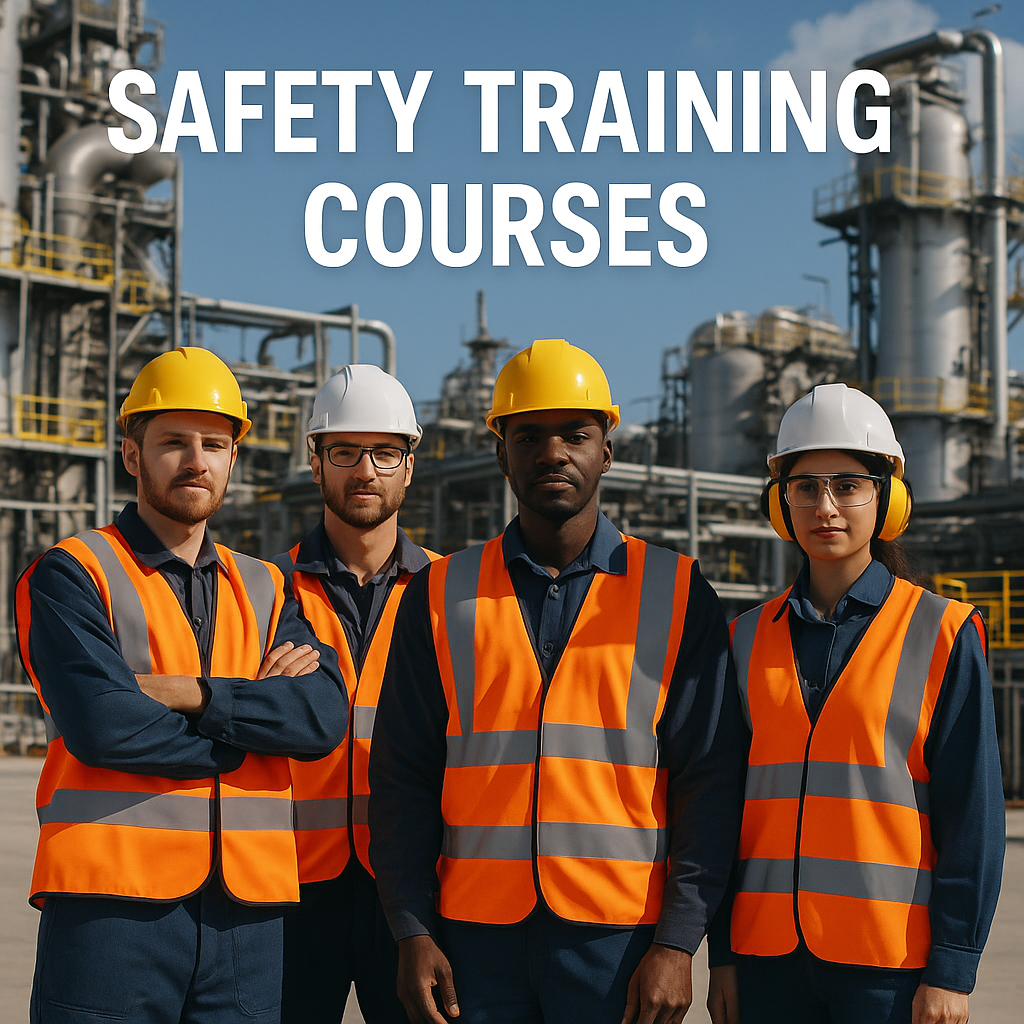
Businesses across industries in Saudi Arabia are increasingly enrolling their employees in certified programs. Some of the most in-demand safety training courses include:
A globally recognized qualification, NEBOSH courses are highly sought after by professionals in oil & gas, construction, and manufacturing.
OSHA courses provide in-depth knowledge on hazard recognition, emergency response, and workplace compliance.
These courses help managers and supervisors implement effective safety practices within organizations.
Equipping employees with life-saving skills ensures immediate response during workplace emergencies.
Essential for high-rise buildings, factories, and industrial sites, this course teaches fire prevention and safe evacuation.
Focused on industries using heavy machinery, this course trains employees on safe operations, inspections, and maintenance.
Choosing the right safety course can be confusing. Your ideal certification isn’t just about your career level; it’s also about the industry you work in. Here’s a quick guide to the certifications that carry the most weight for major Saudi industries in 2025.
For Oil, Gas & Petrochemicals: This is Saudi Arabia’s cornerstone industry, with the strictest standards. Key certifications employers look for are NEBOSH International General Certificate (IGC) and specialized courses like H2S Awareness and Confined Space Entry. Major companies like Aramco and SABIC often require these for their contractors.
For Construction & Mega-Projects: With projects like NEOM and the Red Sea Project, the demand is immense. Alongside NEBOSH IGC, site safety professionals in construction must be proficient in scaffolding safety, working at heights, and heavy equipment operations. IOSH Managing Safely is also highly valued for site supervisors.
For Manufacturing & Industrial Operations: Professionals here benefit greatly from OSHA courses for foundational hazard awareness and lockout/tagout procedures. Specialized training in machine guarding and process safety is also critical.
For Healthcare & Facilities Management: This sector prioritizes First Aid & CPR (often mandated), fire safety & evacuation training (required by Saudi Civil Defense), and risk assessment skills tailored to clinical environments.
Feeling overwhelmed by the options? Let’s simplify it. Choosing the right course depends entirely on your career stage and goals.
You are a new entrant, a worker, or a supervisor needing to understand fundamental safety principles to protect yourself and your team.
Your Best Fit: OSHA 10/30-Hour or Basic Safety Induction Course. This is your essential passport to site entry.
You are a team leader, supervisor, or looking to move into a dedicated safety role.
Your Best Fit: IOSH Managing Safely. This course teaches you how to manage safety, not just follow it.
You are aiming for a dedicated, high-level career as a Safety Officer, HSE Engineer, or Manager.
Your Best Fit: NEBOSH IGC. This is the gold standard and your direct pathway to senior roles.
Still unsure? A good rule of thumb is this: OSHA keeps you safe, IOSH teaches you to keep others safe, and NEBOSH qualifies you to lead an entire organization’s safety culture.
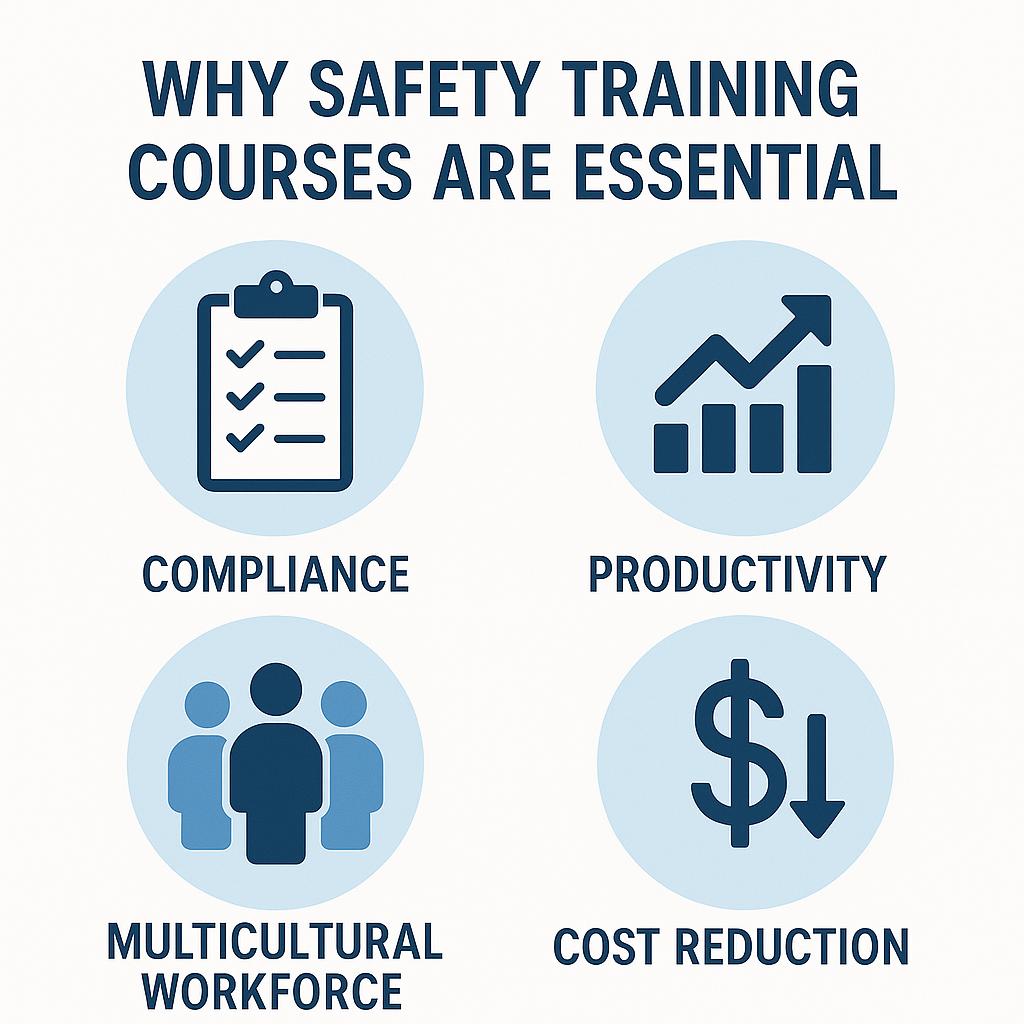
Saudi Arabia’s Ministry of Human Resources and Social Development, along with other regulatory bodies, strictly monitors workplace safety. Organizations that fail to comply risk fines, project delays, and reputational damage. Enrolling employees in safety training courses in Saudi Arabia ensures compliance with Saudi labor laws and international standards like OSHA, and ISO.
From oil refineries to mega construction projects, Saudi Arabia operates in industries where workplace hazards are common. Safety training prepares employees to identify risks, prevent accidents, and respond effectively during emergencies.
The Kingdom employs millions of expatriates from different nationalities. Training courses designed with multilingual approaches ensure that every worker, regardless of language, understands critical safety instructions.
Fewer accidents mean less downtime, reduced medical costs, and uninterrupted project delivery. Safety training boosts efficiency and minimizes financial losses caused by workplace incidents
International companies prefer working with Saudi organizations that have strong safety records. Certified training builds trust and enhances a company’s global reputation.
Oil & Gas Sector قطاع النفط والغاز
Construction Sector قطاع البناء
Healthcare Sector
Manufacturing and Logistics تصنيع والخدمات اللوجستية
Each of these industries has unique risks, and safety training courses in Saudi Arabia are tailored to meet these challenges.
Your 5-Point Checklist for Choosing a Safety Training Provider in Saudi Arabia
With the surge in demand for Safety Training Courses in Saudi Arabia, dozens of providers have emerged. How can you ensure you’re investing in quality training that will be recognized by employers and truly make your workplace safer?
Use this practical checklist to evaluate any provider before you commit:
Verify “Saudi-Specific” Accreditation: Does the provider have formal accreditation or approval from the Saudi Civil Defense, the Ministry of Human Resources and Social Development (MHRSD), or major national companies (like Saudi Aramco’s contractor safety standards)? Generic international certificates may not meet local legal requirements.
Scrutinize the Trainer’s Real-World Profile: Ask for trainer bios. Do they have 10+ years of hands-on safety experience on Saudi projects (e.g., in Riyadh construction, Eastern Province oil & gas)? There’s a vast difference between a theoretical instructor and one who has managed real risks on Saudi sites.
Look Beyond Price for True Value: The cheapest course is often the most expensive mistake. Calculate the true cost, which includes:
First-Time Pass Rate: A high rate indicates effective teaching.
Post-Training Support: Do they offer career guidance, certificate verification for employers, or help with compliance documentation?
Demand Transparency on Outcomes: A confident provider can clearly tell you:
The exact certification you’ll receive and its validity period in Saudi Arabia.
Typical career paths and salary ranges for graduates in the Saudi market.
Assess the “Hands-On” Ratio: Safety is a practical skill. Ask what percentage of the course involves realistic drills, equipment use, and scenario-based assessments—not just slideshows. Quality training should be at least 50% practical.
Why This Matters: Following this checklist ensures your investment builds real competency for the Saudi workplace, not just a paper certificate. At Global Arab, we welcome this scrutiny because our programs are built to excel in every point, ensuring you are truly *“job-ready.”
You can buy a course from a vendor. But to build a lasting culture of safety that drives business performance, you need an ally.
The difference between a vendor and a strategic ally determines whether your training investment creates a temporary certificate or a permanent competitive advantage.
A Vendor: Sends a trainer, issues certificates, and sends an invoice. The relationship ends at the classroom door.
A Strategic Ally (The GlobalArab Model):
Acts as an Extension of Your HSE Department: We take the time to understand your specific projects, corporate culture, and long-term goals in Saudi Arabia. Our advisors become familiar faces who provide continuity.
Provides Intelligence, Not Just Instruction: We keep you ahead of the curve with insights on upcoming regulatory changes in KSA, industry best practices from other mega-projects, and trends in safety technology relevant to your sector.
Focuses on Leading Indicators, Not Just Lagging Ones: While reducing incident rates (a lagging indicator) is crucial, we help you measure and improve leading indicators—like near-miss reporting rates, safety audit scores, and employee safety perception surveys. This allows you to prevent incidents before they happen.
Invests in Your Team’s Growth: We see your employees’ development as part of our mission. This means being available for post-training coaching, helping high-potential staff plan their NEBOSH Diploma path, and creating opportunities for your team to network with other safety professionals in our ecosystem.
The Bottom Line: In the high-stakes environment of Saudi Arabia’s transformation, safety cannot be outsourced to the lowest bidder. It must be co-developed with a partner who shares your commitment to excellence and understands that your success is our success. This partnership paradigm is what turns Safety Training in Saudi Arabia from a transactional cost into one of your organization’s most valuable strategic assets.
In today’s Saudi market, generic safety training isn’t enough. Companies need training that aligns with specific Saudi regulations and project requirements. Here’s what makes our Safety Training Courses in Saudi Arabia stand out in compliance and relevance:
While we teach international standards like OSHA and IOSH, we uniquely integrate:
Saudi Labor Law Section 5 requirements for workplace safety
Saudi Civil Defense fire and emergency protocols
Vision 2030 safety initiatives and giga-project standards
Industry-specific requirements for Aramco, SABIC, and NEOM contractors
Many international certificates aren’t accepted without local validation. Our graduates receive:
Dual certification (International + Saudi-recognized documentation)
Arabic/English certificates accepted by Saudi authorities
Training records formatted for Saudi Ministry of Human Resources audits
Company compliance packages for employers needing to demonstrate trained staff
When Saudi employers see “Globalarab” on your certificate, they immediately recognize:
You understand local safety regulations, not just international theory
Your training includes Saudi-specific case studies and scenarios
You’re prepared for actual workplace inspections and audits
Your certification meets both Saudi and international standards
Real Impact: Our students report that this Saudi-specific focus is what interviewers notice first—and what often leads to job offers over equally certified candidates.
Many companies in Saudi Arabia believe they are compliant with safety training regulations—until an inspection reveals otherwise. The gap between “we have training” and “we have the right training, for the right people, with valid certifications” is where costly fines and project delays occur.
Use this self-audit checklist to identify potential gaps in your organization’s Safety Training in Saudi Arabia compliance before an inspector does.
Section A: Regulatory Compliance Foundation
| Question | Yes | No | Action Needed |
|---|---|---|---|
| Do you know the exact number of certified safety officers required by law for your workforce size and risk classification? | ☐ | ☐ | Review Ministry of Human Resources guidelines for your industry. |
| Have you verified that all safety certificates are recognized by Saudi Civil Defense and MHRSD? | ☐ | ☐ | Request verification documentation from your training provider. |
| Do you have documented training records readily available for inspection? | ☐ | ☐ | Implement a centralized digital or physical filing system. |
Section B: Workforce Coverage Analysis
| Question | Yes | No | Action Needed |
|---|---|---|---|
| Have you mapped safety certifications to specific job roles and shift schedules? | ☐ | ☐ | Conduct a Training Needs Analysis for each department. |
| Is there at least one certified first aider on every shift, in every physical location? | ☐ | ☐ | Review shift schedules and identify coverage gaps. |
| Do you have a system to track certificate expiration dates (e.g., NEBOSH, IOSH, First Aid)? | ☐ | ☐ | Use a spreadsheet or LMS with 90-day advance notifications. |
Section C: Quality & Relevance Check
| Question | Yes | No | Action Needed |
|---|---|---|---|
| Does your training curriculum include Saudi-specific regulations (e.g., Labor Law, Civil Defense codes)? | ☐ | ☐ | Partner with a provider like Global Arab that offers local integration. |
| Do you conduct post-training assessments to verify practical skill retention? | ☐ | ☐ | Schedule 6-month refresher drills for key skills like CPR and fire extinguisher use. |
| Are your training records formatted to meet Saudi Aramco or major client audit requirements? | ☐ | ☐ | Request compliance-ready documentation from your provider. |
Section D: The Gap Score
0-2 “No” answers: You have a strong foundation. Focus on maintenance and advanced programs.
3-5 “No” answers: Moderate risk. Prioritize addressing these gaps within 3 months.
6+ “No” answers: High risk. Schedule an urgent compliance review to prevent potential fines or project disqualification.
The GlobalArab Advantage: We offer a complimentary, detailed compliance assessment for organizations. Our team will help you complete this gap analysis, identify specific vulnerabilities, and create a phased training roadmap that ensures you are fully compliant and audit-ready.
You can know every rule in the book, but applying them on a fast-paced site in Riyadh, a complex plant in Jubail, or a new development in Jeddah is a different skill entirely. This is the practical knowledge gap that separates a certified professional from a truly competent one.
At Globalarab, we bridge this gap by preparing you for the real-world scenarios you’ll actually face:
Communicating Safety in a Multicultural Workforce: How do you effectively convey critical safety procedures to a team where Arabic, English, Urdu, and Bengali are spoken? We teach you simple, visual, and universal techniques to ensure everyone understands, regardless of language.
The Climate Factor: Saudi Arabia’s extreme heat isn’t just a comfort issue—it’s a major safety hazard. We go beyond “drink water” to teach you how to recognize early signs of heat stress, implement effective work/rest schedules, and manage the unique risks of working in high temperatures.
Navigating Authority and Urgency: On a deadline-driven project, how do you enforce a “stop work” order for a safety violation without creating conflict? We provide the communication and conflict-resolution skills to help you uphold standards while maintaining professional relationships.
Why This Matters: This isn’t theoretical. It’s the gritty, practical knowledge that site managers and safety officers in Saudi Arabia use every single day to prevent accidents and save lives. Our Safety Training in Saudi Arabia is built on these real-world foundations, not just textbook theory.
Myth #1: “Safety training is just for getting a certificate to hang on the wall.”
Reality: While the certificate is valuable proof of your qualification, the real value is the mental shift. True training transforms you from someone who follows rules to someone who understands and anticipates risks. It’s the difference between knowing you should wear a hard hat and understanding exactly what could happen if you don’t. This proactive mindset is what Saudi employers like Aramco and NEOM contractors are desperately searching for.
Myth #2: “A one-day seminar is enough to make me ‘safety qualified.'”
Reality: Think of safety like learning to drive. You wouldn’t trust a driver who only read a pamphlet. Comprehensive safety competency—especially for recognized certifications like OSHA or IOSH—requires time to absorb principles, practice risk assessments, and pass rigorous evaluations. Our courses are designed to build lasting competence, not just provide a attendance sheet.
Myth #3: “This is only useful for construction workers.”
Reality: This might be the biggest myth of all. Unsafe conditions don’t just exist on a construction site. They are in offices (fire hazards, electrical safety), hospitals (infection control), and warehouses (ergonomic injuries). Wherever there are people working, there is a need for safety awareness. The skills you learn are universally applicable and make you a more valuable employee in any industry.
At Global Arab, we specialize in providing industry-leading safety training that equips employees with practical knowledge and globally recognized certifications. Our offerings include:
Global Arab’s mission is to support businesses in Saudi Arabia in creating safer workplaces while meeting regulatory requirements. By enrolling in our safety training courses in Saudi Arabia, organizations can ensure compliance, protect their employees, and improve operational performance.
Textbook knowledge is one thing; recognizing a hazard before it becomes an incident is another. Our training is built around real scenarios encountered on Saudi projects:
The Construction Site: How to properly assess the work area for fall risks, electrical hazards, and improper scaffolding before work begins.
The Industrial Plant: Identifying the subtle signs of a potential chemical leak or understanding Lockout-Tagout (LOTO) procedures to prevent catastrophic machinery activation.
The Confined Space: Executing a safe entry permit and monitoring atmosphere levels—procedures that are literally a matter of life and death.
The Daily Routine: Cultivating the habit of proactive housekeeping to prevent slips, trips, and falls, which are among the most common workplace injuries.
This practical, scenario-based training is what employers like Aramco and SABIC contractors are truly looking for. They need people who are vigilant, not just certified.
Saudi Arabia’s Vision 2030 emphasizes workplace modernization and human resource development. As industries evolve, so will the demand for specialized training courses. Future trends include:
Organizations that embrace these innovations alongside traditional training will stay ahead in workplace safety.
A: Absolutely. In fact, it’s often more valuable. Being the certified safety-conscious person on your team makes you indispensable. It demonstrates initiative and leadership, which are key factors for promotion, especially under Saudi Arabia’s strict “Saudization” goals.
A: It varies. OSHA cards typically do not expire, but many Saudi employers require refresher training every 3-4 years to ensure knowledge is current. IOSH Managing Safely recommends a 3-year refresher. We advise always checking your specific company or project policy.
A: Yes, we offer accredited virtual instructor-led courses that are fully recognized. The key is that the course includes live interaction with an expert trainer and proper, proctored assessment—not just pre-recorded videos. Our virtual classes provide the same certificate as our classroom training.
A: Confidence. Not just confidence in passing an exam, but the confidence to walk onto a site, identify a hazard, and have the knowledge to speak up and correct it. That ability saves lives and builds careers.
A: We understand. That’s why we offer flexible payment options and see our training as an investment in your future. The return on that investment, through higher pay and job security, typically pays for the course many times over.
The real test of great safety training isn’t the final exam; it’s what you do on Monday morning when you’re back at your job. Here’s how our graduates start making a difference from day one:
1. Conduct a “Fresh Eye” Site Walk:
Before you even log into your computer, take a slow, deliberate walk through your work area. You’ll be amazed at what you notice now that you’ve been trained. That tangled extension cord, the unmarked cleaning spill, the blocked fire exit—you’ll see these not as minor issues, but as potential incidents waiting to happen. This simple habit alone can prevent countless accidents.
2. Start a Conversation, Not a Confrontation:
Safety is about culture. Instead of pointing fingers, use phrases like, “I was thinking about our safety training and noticed…” or “What if we tried this a different way to be safer?” This collaborative approach, rooted in your new knowledge, builds trust and makes everyone more receptive to safe practices.
3. Document One “Near-Miss” Each Week:
The most powerful learning tools are often the incidents that almost happened. Start paying attention to these “near-misses” and jot them down. This isn’t about getting anyone in trouble; it’s about creating free, real-world case studies that you and your team can learn from to prevent a real tragedy next time.
This is the “Globalarab difference.” We equip you not just with a certificate, but with a practical action plan to become an agent of positive change in your workplace, starting immediately.
Many people see the price of a safety course. But what about the cost of not taking it? Let’s break down the real Return on Investment (ROI) for Safety Training in Saudi Arabia, whether you’re an individual or a company.
For the Ambitious Professional:
Think of your certification fee not as a cost, but as the down payment on your future earnings. Here’s the financial reality:
Salary Boost: Professionals with an OSHA or IOSH certification typically see a 10-20% increase in their starting salary. A NEBOSH certification can lead to a 25-40% increase when moving into officer or manager roles.
Job Security: In a competitive market, being the certified candidate makes you indispensable. As Saudiization (Saudization) policies strengthen, companies are actively seeking qualified Saudi nationals and residents with proven competencies.
Career Velocity: Safety certification is the fastest way to transition from a general role (like an admin or technician) into a specialized, respected, and higher-paying safety career path.
For the Forward-Thinking Business Owner or Manager:
If you’re investing in team training, you’re not spending—you’re strategically investing in your company’s resilience and profitability.
The Cost of an Incident vs. The Cost of Training: A single minor incident can cost thousands in delays, investigations, and repairs. A major incident can cost millions and irreparable reputational damage. The cost of training your entire team is a fraction of this.
Winning Tenders and Contracts: Increasingly, especially for government and giga-projects like NEOM and Red Sea Global, demonstrating a team with certified safety competence is a prerequisite for even being considered for a tender.
Operational Efficiency: A safe worksite is an efficient worksite. Proper training reduces downtime from accidents, lowers equipment damage, and improves overall workflow and morale.
The Globalarab Promise: We measure our success by your ROI. That’s why our Safety Training in Saudi Arabia focuses on practical skills that deliver tangible value from day one, ensuring your investment—whether personal or corporate—pays for itself many times over.
For CFOs, plant managers, and business owners in Saudi Arabia, every expense must be justified. While the moral case for safety training is clear, the financial case often needs to be quantified. Here is a practical framework to calculate the true Return on Investment for your Safety Training in Saudi Arabia investment.
The Formula:
ROI = (Cost Avoided + Value Gained) ÷ Training Investment
Step 1: Calculate Your Training Investment
Course fees per employee
Hours away from work × average hourly wage
Administrative time for coordination
Step 2: Calculate Cost Avoided (The “What If” Scenario)
Use Saudi-specific data to estimate potential incident costs you’re preventing:
| Incident Type | Average Direct Cost (SAR) | Hidden Costs (3x Direct) | Total Potential Cost |
|---|---|---|---|
| Minor Injury (First aid only) | 500 – 2,000 | 1,500 – 6,000 | 2,000 – 8,000 |
| Lost Time Injury (LTI) | 15,000 – 50,000 | 45,000 – 150,000 | 60,000 – 200,000 |
| Serious Incident (Fatality/Disability) | 500,000 – 2M+ | 1.5M – 6M+ | 2M – 8M+ |
Source: Saudi Ministry of Human Resources and Social Development industry reports
Step 3: Calculate Value Gained (The Competitive Advantage)
Tender Success Rate: What percentage of contracts require certified safety personnel? Estimate the value of one additional contract win.
Insurance Premium Reduction: Many insurers in Saudi Arabia offer 5-15% discounts for certified safety programs. Request this data from your provider.
Productivity Gain: Safe sites are efficient sites. Estimate a 5-10% reduction in downtime-related losses.
Real-World Example:
A Jubail industrial facility with 100 employees invested SAR 45,000 in comprehensive Safety Training in Saudi Arabia. In year one, they avoided two lost-time injuries (saving ~SAR 120,000), reduced insurance premiums by 8% (saving SAR 15,000), and won a SAR 2M contract that required certified safety staff. Their total ROI exceeded 300%.
The GlobalArab Advantage: We provide a customized ROI worksheet to every corporate client. We help you gather the right data before training so you can measure real results afterward. Because when safety training is viewed as an investment rather than an expense, it gets the budget and attention it deserves.
The true test of effective Safety Training Courses in Saudi Arabia isn’t the exam score—it’s what you can do differently at work the very next week. Here’s how our graduates apply their training:
Week 1: The Proactive Safety Audit
Conduct a 5-minute daily site walk using our structured checklist
Identify and report 3 priority hazards using proper Saudi incident reporting formats
Implement basic controls for common risks in your specific industry
Month 1: Building Safety Culture
Lead a 15-minute toolbox talk using our Saudi-specific templates
Mentor 2 colleagues on proper PPE usage and hazard recognition
Document and analyze near-miss incidents to prevent future accidents
Quarter 1: Creating Lasting Impact
Develop a department-specific safety improvement plan
Train new employees using simplified Arabic/English safety instructions
Present data-driven safety recommendations to management
For Construction Professionals in Riyadh/Jeddah:
Implement height work safety protocols for high-rise projects
Manage dust and heat stress controls in Saudi climate conditions
Coordinate multi-contractor safety on complex sites
For Oil & Gas Professionals in Eastern Province:
Apply process safety management basics to your facility
Conduct effective permit-to-work systems following Aramco standards
Implement emergency response drills for your team
For Manufacturing & Industrial Workers:
Set up effective machine guarding and lockout-tagout procedures
Manage chemical safety according to Saudi environmental regulations
Reduce repetitive strain injuries through ergonomic assessments
We provide every graduate with:
30-day implementation checklist specific to your industry
Saudi-compliant safety templates ready for immediate use
Access to monthly webinars on current Saudi safety topics
Direct line to our trainers for on-the-job guidance
A key question for any professional or company is: “Does this training meet Saudi Arabia’s official requirements?” At Global Arab, our curriculum is designed as a bridge between international best practices (like NEBOSH and OSHA) and local Saudi regulations.
Our courses prepare you to meet the standards of:
Saudi Civil Defense: For fire safety, emergency evacuation plans, and on-site emergency response protocols.
The Ministry of Human Resources and Social Development (MHRSD): For general workplace safety, hazard reporting, and compliance with Saudi Labor Law.
Major National Companies (Like Saudi Aramco): Our course content covers the specific Contractor Safety Management Systems (CSMS) and safety requirements needed to work on major projects.
We ensure you don’t just learn theory; you learn how to apply it within the specific regulatory framework of the Kingdom. This means when you complete a course with us, you’re equipped not just with a certificate, but with the knowledge to help your organization pass inspections, win tenders, and operate safely and legally in Saudi Arabia.
Earning a safety certification is an achievement, but its real value is measured by the impact you make. Many professionals ask, “What do I do on Monday morning?” This 90-day plan gives you a clear path to apply your Safety Training Courses Saudi Arabia knowledge and become a recognized safety leader.
Weeks 1-2: The Proactive Observer
Conduct a “Fresh-Eye” Site Walk: Use a simple checklist to identify just 3 priority hazards (e.g., improper ladder use, blocked fire exits, missing PPE).
Start One Positive Safety Conversation: Instead of giving orders, ask a colleague: “I was thinking about our safety training and noticed [situation]. What’s the safest way we could handle this together?”
Month 1: The Systematic Contributor
Lead a 10-Minute Toolbox Talk: Use a provided template to discuss one high-frequency risk, like heat stress or manual handling.
Document One ‘Near-Miss’: Practice turning a minor incident into a learning opportunity by analyzing the root cause, not assigning blame.
Months 2-3: The Valued Advisor
Develop a One-Page Improvement Proposal: For one hazard you identified, suggest a simple, cost-effective solution (e.g., visual markers for trip hazards). Support it with a brief rationale: “This change could reduce this specific risk by an estimated 30%.”
Mentor a New Colleague: Share one key safety procedure. Teaching cements your own expertise and builds your reputation.
The Global Arab Advantage: Our training includes practical templates and guidance for this exact plan. We ensure you don’t just get certified—you gain the confidence and strategy to create visible value, improve safety culture, and fast-track your career advancement from day one.
Safety is more than a regulation—it is a responsibility. As Saudi Arabia continues its journey as a global industrial leader, safety training courses in Saudi Arabia will remain the backbone of sustainable development.
From accident prevention and compliance to employee confidence and international recognition, safety training delivers benefits at every level.
With Global Arab as your partner, you gain access to world-class courses, industry-focused programs, and authentic certifications that ensure your workforce is prepared, confident, and compliant.
👉 Take the next step today. Enroll your team in Global Arab’s safety training courses in Saudi Arabia and build a safer, stronger future for your organization.
We deliver internationally recognized safety training and professional inspection solutions.
From workplace safety to equipment compliance, our certified experts ensure quality and trust.
Serving Saudi Arabia and the Gulf region with global standards.
Your safety, knowledge, and success are our priority.
